The 10,000-step Myth is Dead – Learn What Actually Lowers Your Risk of Dying Early
TL;DR:
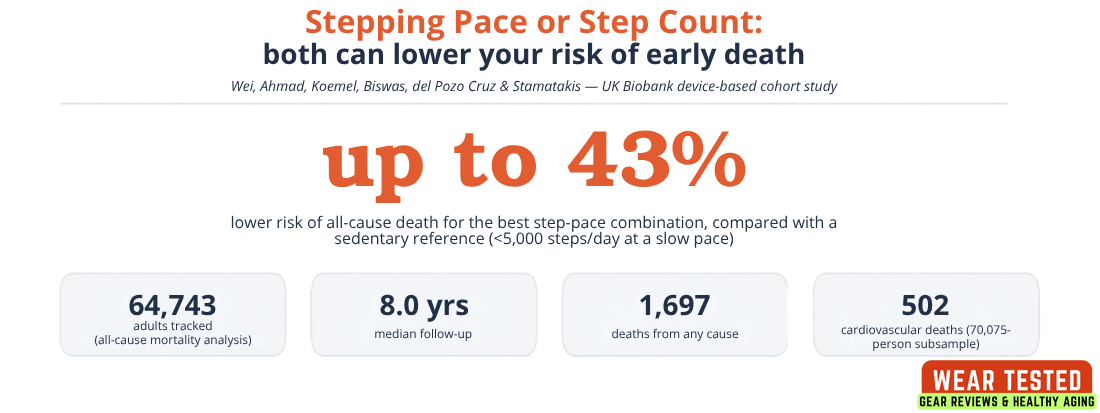
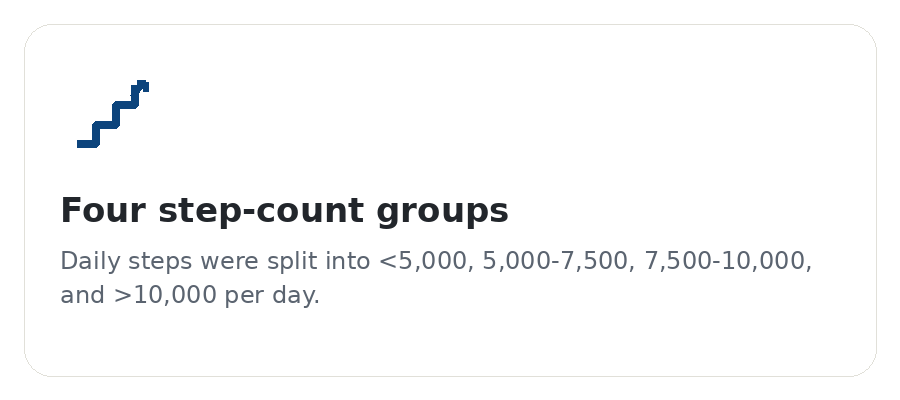
A September 2026 British Journal of Sports Medicine study of 64,743 UK adults found that pace and step count can each lower your risk of early death, so you don’t need both.
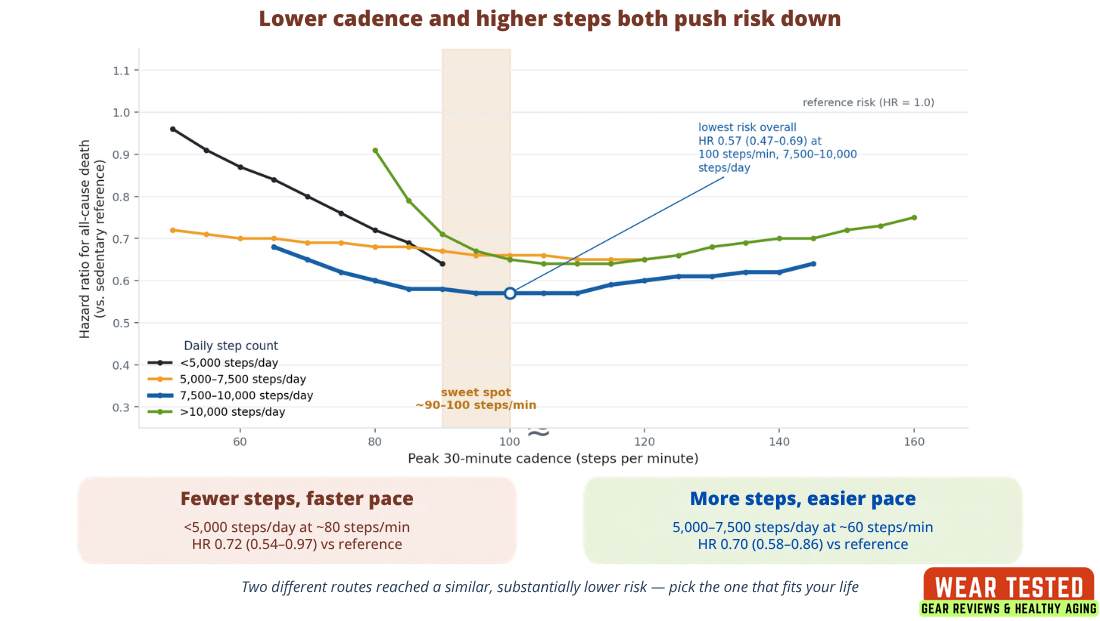
The result: Fewer steps at a faster pace, or more steps at a slower pace, were linked to up to 43% lower risk of early death.
- Fewer steps, higher pace: Under 5,000 steps a day at a brisker cadence gave benefits comparable to 5,000-7,500 steps at an easier pace.
- Target pace: About 90-100 steps per minute during your fastest 30 minutes of the day, which don’t need to be consecutive.
- Heart health: Cardiovascular mortality showed a similar pattern.
- The 10,000-step goal: It isn’t evidence-based, and regular habits matter more than hitting one number.
Latest Research
Ever feel guilty for not hitting 10,000 steps? New research says you might not need to.
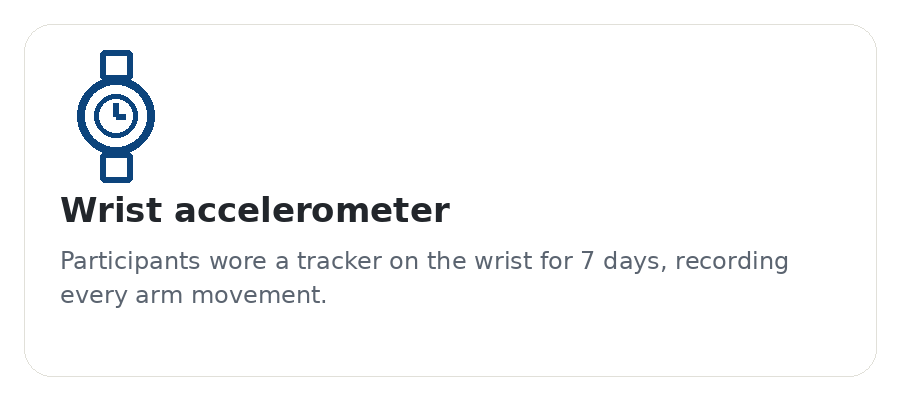
A study of 64,743 UK adults, tracked for eight years using wrist accelerometers, set out to answer a question most step-count research has ignored: what happens when you combine how many steps you take with how fast you take them?
The findings, published this month in the British Journal of Sports Medicine, are good news for anyone who’s ever felt boxed in by a single daily target. Walking briskly but taking fewer steps was linked to a lower risk of early death – and so was taking more steps at an easier pace. Neither route required hitting 10,000 steps a day, a number that, as the researchers point out, has more to do with a 1960s pedometer ad campaign than with actual health evidence.
The sweet spot the researchers found? A pace of around 90 to 100 steps per minute, sustained for about 30 minutes a day, showed benefits across every step-count group they studied.
Five Key Takeaways
Pace can make up for fewer steps.
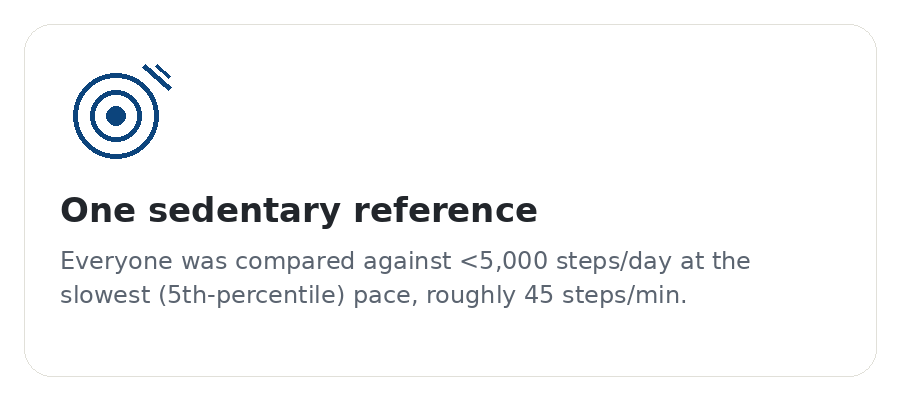
People taking fewer than 5,000 steps a day at a higher stepping intensity had significantly lower all-cause and cardiovascular mortality risk, comparable to people taking 5,000-7,500 steps at a lower intensity.
Steps still count if you can’t go fast.
The headline finding is that fewer steps at a faster pace, or more steps at a slower pace, may lower the risk of early death by up to 43 per cent. That gives two workable routes for people with limited time, mobility or fitness.
The sweet spot is about 90-100 steps per minute.
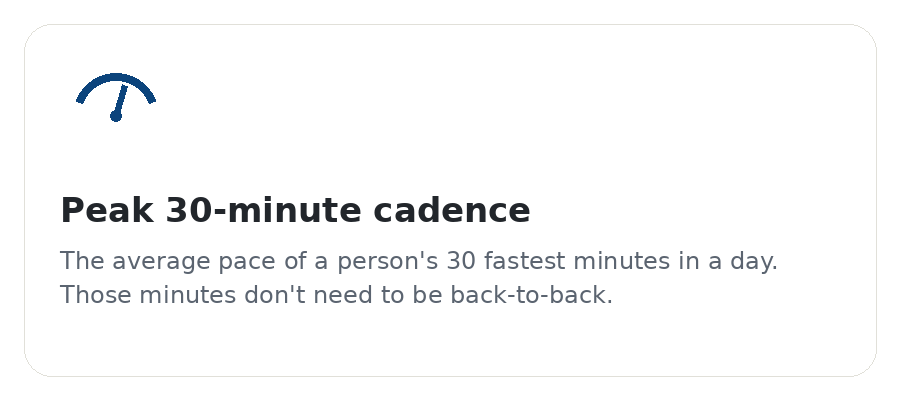
A peak 30-minute cadence of about 90-100 steps per minute was associated with lower mortality risk across all daily step-count groups. That 30 minute is your fastest minutes added up across the day, not one continuous walk. About 100 steps per minute is the usual rule of thumb for moderate intensity.
Heart-related deaths followed the same pattern.
A comparable pattern of lower modeled risk was observed for cardiovascular disease-related mortality.
10,000 steps isn’t a magic number, and consistency matters most.
Co-author Dr Koemel said the 10,000-step target came from a 1960s Japanese pedometer campaign rather than from evidence. A simple pace test from the team is to breathe noticeably harder and stay warm, while still being able to talk in short sentences but not sing.