TL;DR
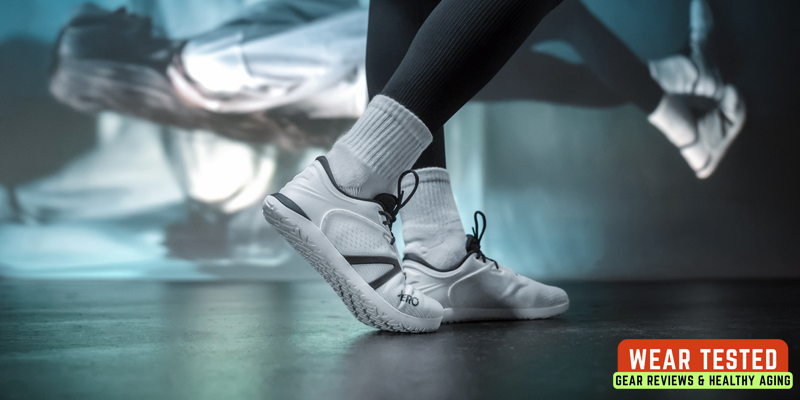
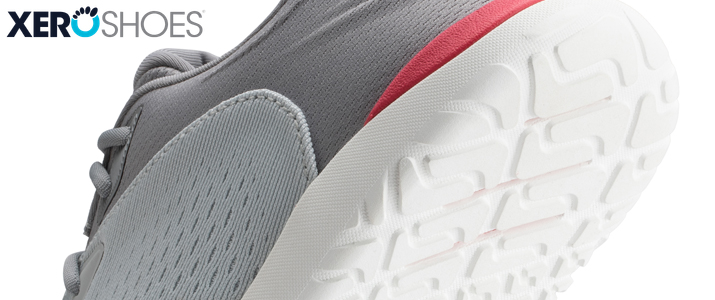
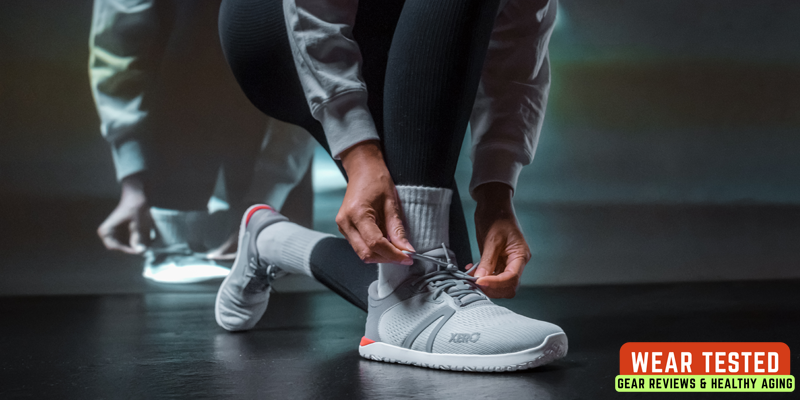
The Xero Shoes Pacer Lite is a zero-drop-style, walk-specific performance shoe built around the natural walking-gait “S-curve” – the heel-to-toe pressure path your foot traces with every step. Its Walk-Specific Outsole Pattern is shaped around that curve’s four phases (strike, brake, stabilize, push-off), its Poron + ETPU heel crash pad tackles the one moment in walking that genuinely needs shock absorption, and its open-vamp engineered mesh upper is built for all-day and all-mile comfort. For rucking specifically, that focus on real walking mechanics – rather than a borrowed running-shoe outsole – is exactly what a loaded, long-distance stride actually needs.
Xero Shoes first performance walking shoe skips the recycled running-shoe playbook and builds the outsole, heel, and upper around the actual mechanics of a walking stride. We broke down what that means for daily miles and loaded rucks on pavement, gravel, and groomed trail.
What is the Pacer Lite?
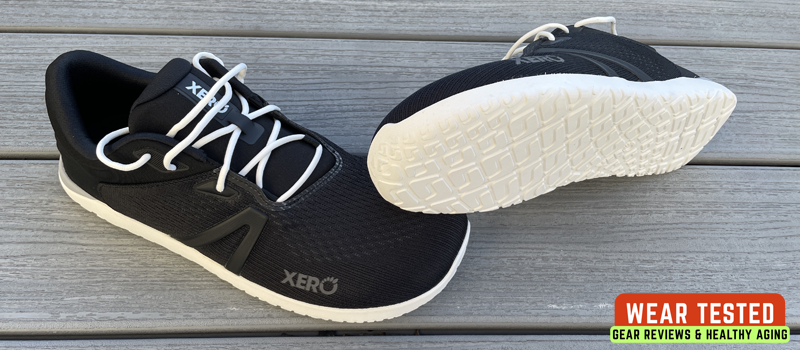
The Pacer Lite is Xero Shoes‘ first performance shoe designed specifically for walking rather than running. That distinction matters more than it sounds. Most “walking shoes” on the market are running shoes with different marketing – same outsole flex geometry, same forefoot-loaded cushioning strategy, same assumptions about how the foot strikes the ground. Walking is a different movement pattern entirely: longer ground contact, a genuine braking phase right after heel strike, and a rolling, continuous transfer of pressure from heel to toe. The Pacer Lite’s whole design brief starts from that difference.
Key Points
- Walk-Specific Outsole Pattern – tread and flex zones mapped to the natural walk-gait S-curve
- Heel Crash Pad – Poron drop-in insert plus ETPU foam concentrated at the heel strike zone
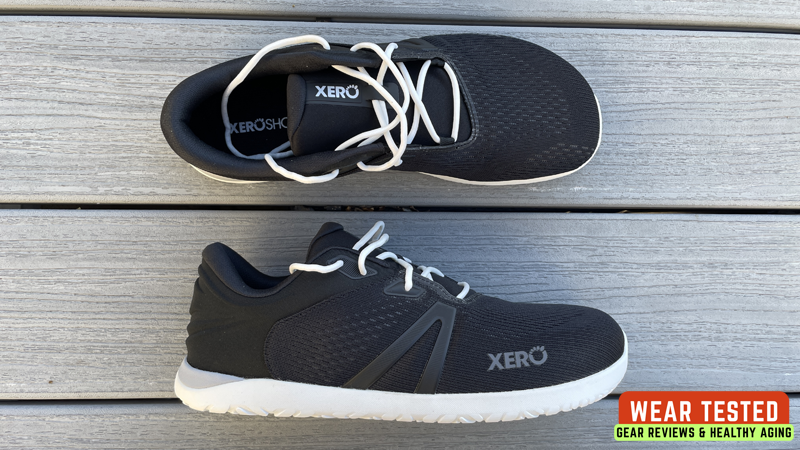
- Open-vamp, engineered mesh upper – built for breathability and natural forefoot splay
- Positioned as Xero’s entry point into dedicated performance walking, distinct from its running and trail lines
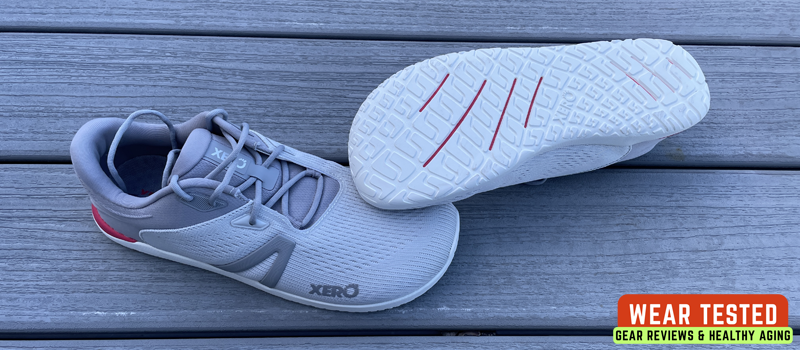
| Category | Pacer Lite |
| Best for | Walking, daily wear, rucking |
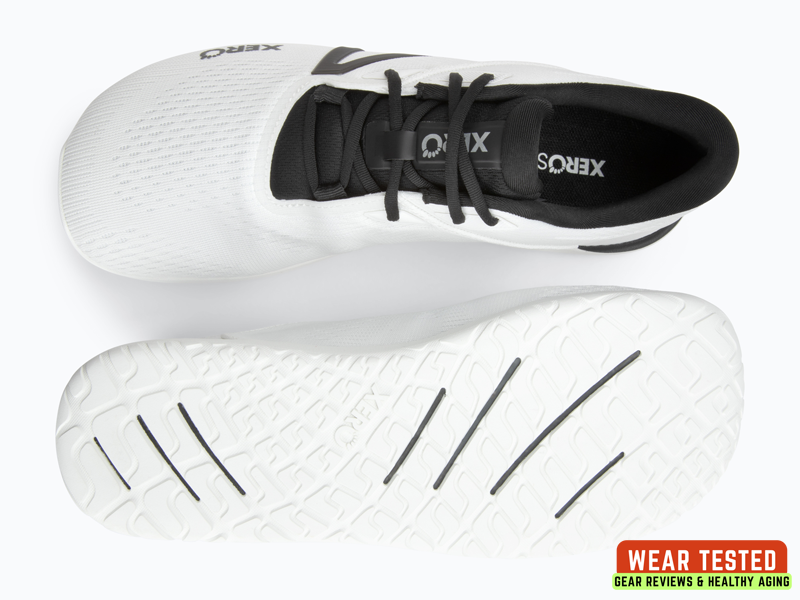
| Outsole | Walk-Specific Outsole Pattern (S-curve flex mapping) |
| Heel cushioning | Poron drop-in insert + ETPU crash pad |
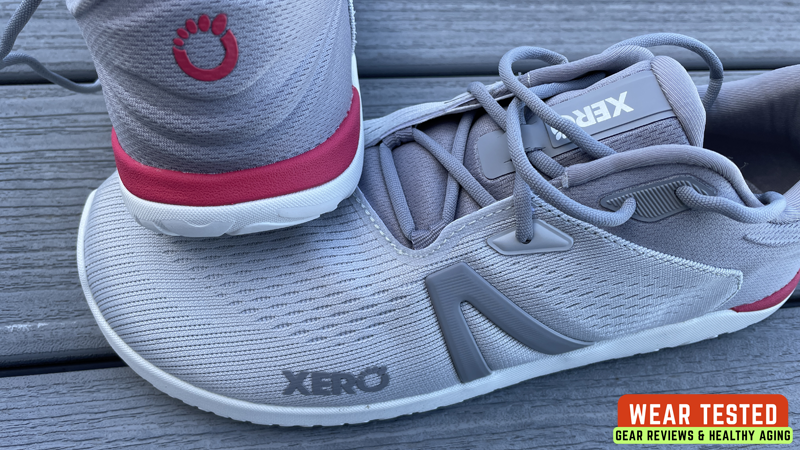
| Upper | Open vamp, breathable engineered mesh |
| Platform | Foot-shaped toe box, following Xero’s standard low-profile last |
| Weight | 10.4 ounces (Men’s US 10.5) |
| Price | $130 MSRP |
Spend under $75: Save 10% with code STEPUP10
Spend $75–$124.99: Save 15% with code STEPUP15
Spend $125+: Save 20% with code STEPUP20
Shop Pacer Lite Now!
Walk-Gait S-Curve Backgrounder
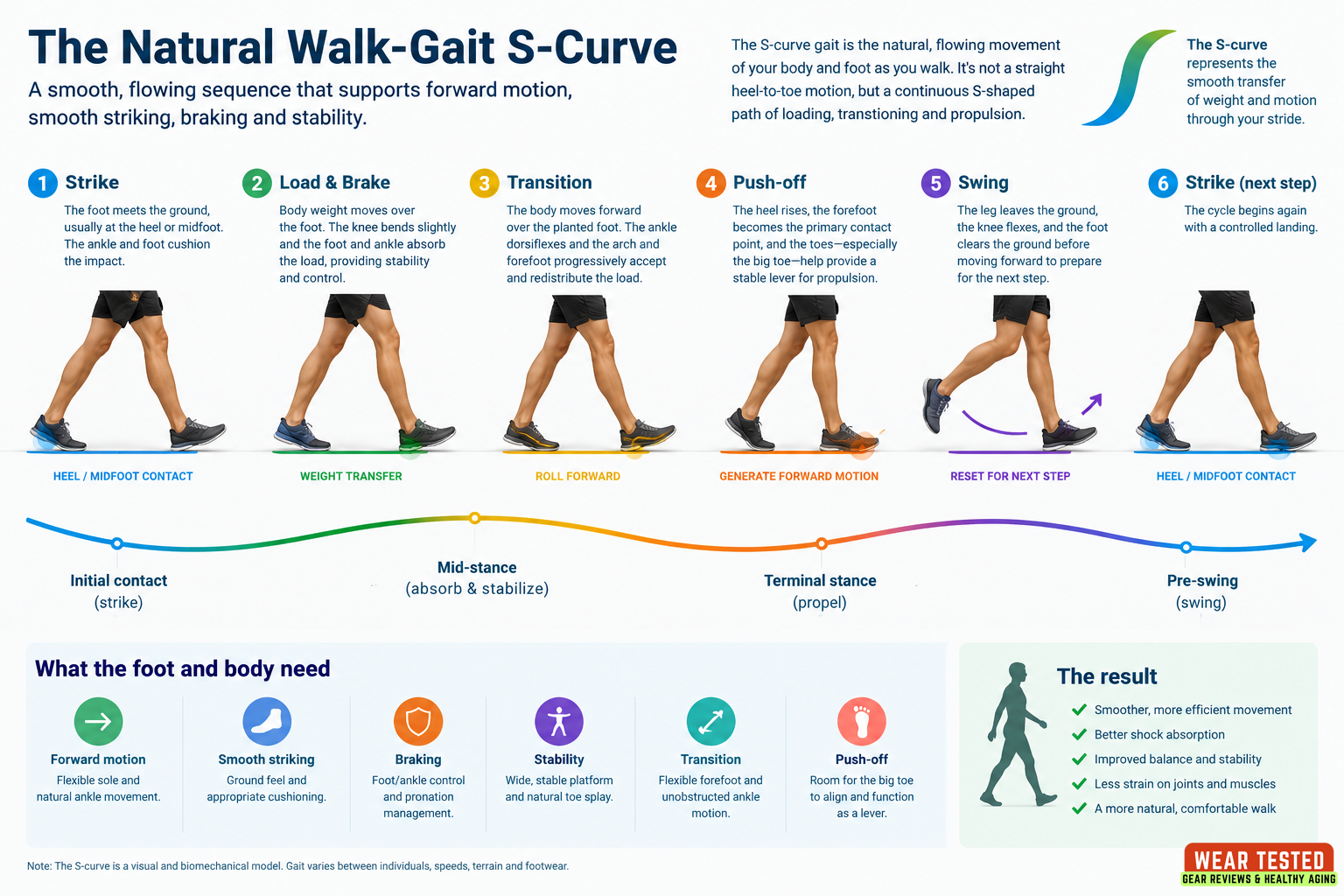
The natural walk-gait S-curve is the anatomical and biomechanical path of pressure distribution and center-of-mass progression across the plantar surface of the foot from initial ground strike to final toe-off. This kinetic pathway optimizes energy return, dampens impact shock, and balances forward momentum with controlled deceleration.
- Initial Contact & Braking: The S-curve typically initiates at the lateral (outer) heel or midfoot. This slightly lateral touchdown acts as an inherent shock absorber, using the subtalar joint to pronate and harness eccentric muscle contractions to safely dissipate ground reaction forces and manage forward braking.
- Midfoot Transition & Stability: As the body weight shifts forward, the trajectory curves inward across the transverse tarsal joint and the ball of the foot. This medial migration locks the midfoot temporarily to create a stable, rigid lever, preventing excessive energy loss and maintaining structural stability over the stance leg.
- Propulsion & Smooth Striking: The curve sweeps forward along the medial column, culminating under the first metatarsal head and the hallux (big toe) for terminal toe-off. This final trajectory maximizes propulsive leverage, propelling the center of mass forward into the next swing phase with minimal muscular fatigue.

- Transitioning to Minimalist Shoes
- The Real Step Count That Matters Isn’t 1000. It’s 100.
- Fast Walking For Longer Life
- The Keys to Longevity Are Right Beneath You
Why Walk-Gait S-Curve Matters for Footwear
This is particularly relevant to barefoot and minimalist footwear, because a good shoe should ideally allow the foot to perform these functions rather than forcing the foot into an artificial gait.
Footwear with zero-drop platforms, wide toe boxes, and flexible soles preserves this natural S-curve by allowing the foot’s intrinsic muscles and the windlass mechanism to articulate fully without artificial restriction.
| Gait Function | What the Foot Needs |
| Forward Motion | Flexible sole and natural ankle movement |
| Smooth Striking | Adequate ground feel and appropriate cushioning |
| Braking | Foot/ankle ability to control pronation and loading |
| Stability | Wide, stable platform and natural toe splay |
| Transition | Flexible forefoot and unobstructed ankle motion |
| Push-Off | Room for the big toe to align and function as a lever |
The important distinction is that natural gait isn’t necessarily synonymous with barefoot gait. Humans naturally vary their foot strike and gait according to speed, terrain, footwear, fatigue, and individual anatomy.
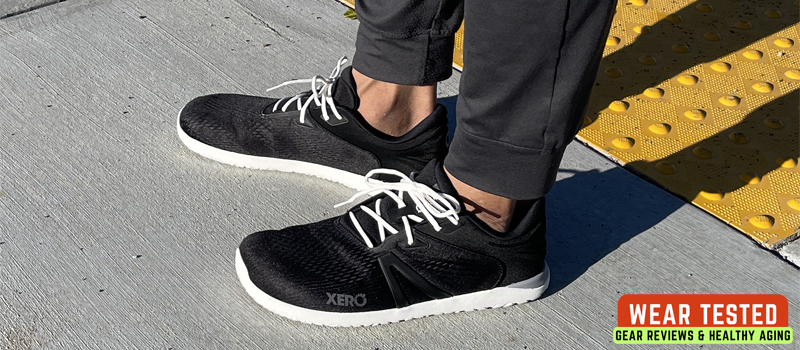
Outsole: built around the curve, not against it
This is where the Walk-Specific Outsole Pattern earns its name. Instead of a flex-groove layout lifted from a running shoe, the tread and bend zones are laid out to mirror those same four phases:
- At the heel, the outsole geometry is shaped to accept that initial lateral-heel contact cleanly, instead of forcing a flat, all-at-once landing.
- Through the midfoot, the flex pattern lets the foot roll medially into a centered, stable midstance without resistance – the point in the stride where you want the shoe to disappear.
- At the forefoot, the outsole supports a clean push-off, so the energy generated at toe-off goes into the next stride instead of getting soaked up by a stiff sole.
In practice, that’s the difference between a shoe that feels like “cushioning” and one that feels like “guidance.” The Pacer Lite isn’t correcting your stride – it’s getting out of the way of the one your body already knows how to do.
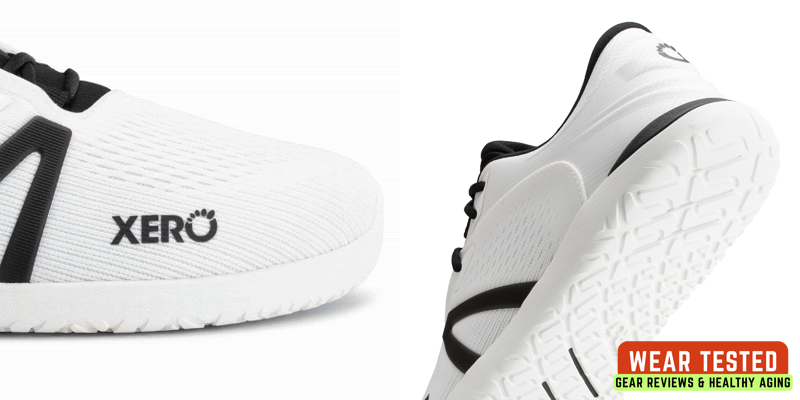
Heel Crash Pad: the one part of walking that actually needs cushioning
Zero-drop, minimalist-leaning shoes have a reputation for being unforgiving on heel strike. The Pacer Lite addresses that directly with a Poron drop-in insert combined with ETPU, concentrated exactly where Phase 1 of the S-curve happens.
This matters more for rucking than almost any other spec on the shoe. Add a 20, 30, or 45-pound ruck and every heel strike hits harder – braking forces climb, impact loading climbs, and a shoe with no shock attenuation at the heel makes itself known by mile three. Poron is prized in performance and orthotic footwear because it pairs energy absorption with fast rebound, so it’s absorbing impact without dulling responsiveness. ETPU (the same broad foam family behind a lot of modern high-rebound midsoles) adds shock attenuation without turning the ride mushy.
The heel is where the S-curve begins – and it’s the one phase of the stride where cushioning and ground feel aren’t actually in conflict.
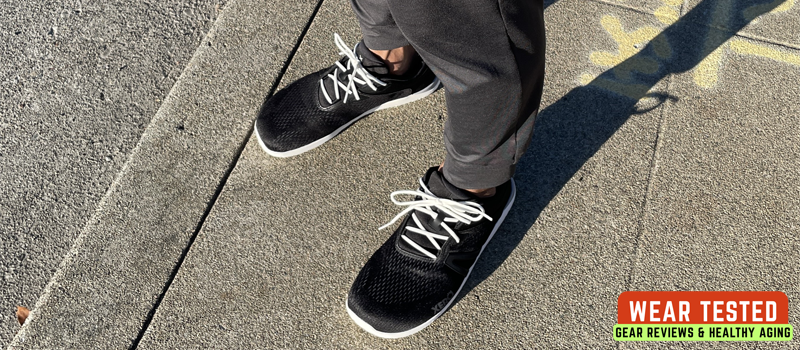
Upper: built for the miles, not just the trailhead
The open vamp and engineered mesh upper rounds out the shoe for anyone logging serious miles – a daily walking habit, a training block, or back-to-back rucks.
- Breathability matters under a loaded pack, where feet run hotter over a longer stance phase per step.
- The open vamp allows natural flex and toe splay right as the foot enters Phase 4 (push-off) – exactly where a stiff upper would otherwise fight the foot.
- All-day comfort isn’t a throwaway line here – the gap between a mesh upper that breathes and one that doesn’t show up as blisters by the afternoon on a 15,000-step day.
Why the Pacer Lite is also a Great Rucking Shoe
Rucking sits in an odd gap in footwear: not quite hiking (usually pavement, gravel, or groomed trail, not technical terrain) and not running (pace and gait are pure walking, just loaded). Most ruckers end up in trail runners built for a running gait, or boots built around ankle support at the expense of natural foot mechanics.
Loaded walking is still walking
Adding weight changes force magnitude, not the underlying gait pattern. A shoe built around the real walking S-curve stays relevant as ruck weight climbs, where a running-shoe outsole becomes a bigger mismatch with every added pound.
The heel crash pad matters more under load, not less
Every added pound amplifies heel-strike impact – precisely the phase the Poron/ETPU heel is built to handle.
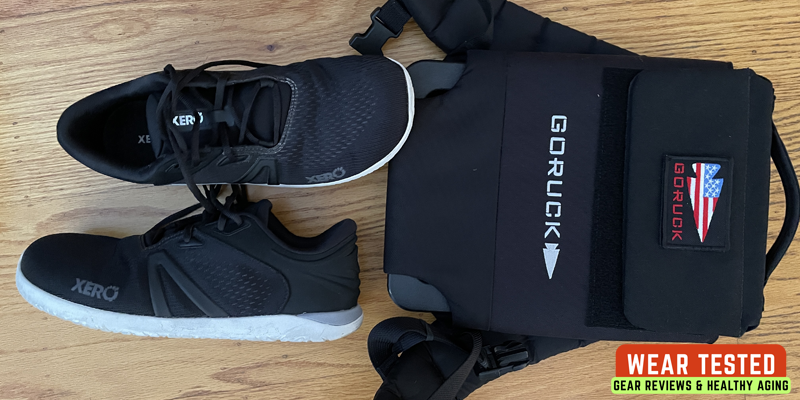
A foot-shaped, low-profile platform supports a stable base
A wider, more natural stance can help distribute a loaded pack’s weight more evenly through the whole foot, rather than concentrating stress at a narrow, elevated heel.
Lightweight construction compounds over distance
Every ounce on your foot gets felt many times across a multi-mile, multi-hour ruck. A minimalist build keeps the shoe itself from becoming part of the load.
What We Want from Pacer Lite After Weeks of Testing
The mark of a shoe actually earning a spot in rotation is that it stops feeling like “gear” and starts feeling like a default. That’s what happened here. Past the first couple of weeks, the Pacer Lite quietly took over daily errands, dinners, and weekend shopping trips – not because we forced it into that role for the review, but because it kept being the easiest thing to reach for. That’s the best compliment a walking shoe can get, and it’s also what surfaced the few things we’d genuinely change.
A dressier, non-leather edition for formal occasions
The Pacer Lite’s mesh-and-webbing build is right for dining out or running errands, but it reads too athletic once the occasion turns formal – a funeral, a wedding, anything with a dress code. We’d love a Pacer Lite variant with a cleaner, more refined upper – vegan leather or a matte technical textile instead of mesh – that keeps the same walk-specific outsole and heel crash pad underneath but looks at home under slacks rather than under joggers.
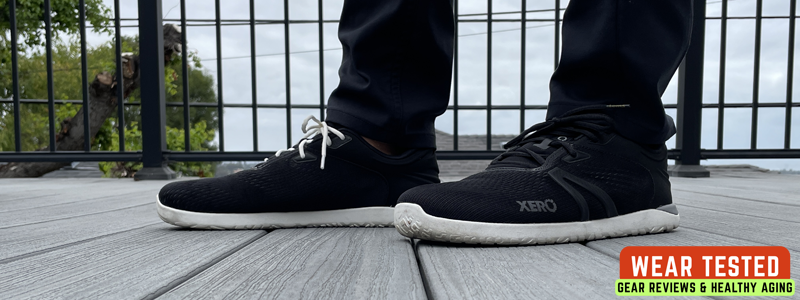
Black laces as a standing option
This is a small ask with an outsized payoff. Swapping to black laces (or offering them as a stock alternate) instantly dresses the shoe down from “trail-adjacent” to “could pass at a wedding from ten feet away.” It’s the cheapest lever Xero Shoes has to widen where this shoe is welcome.
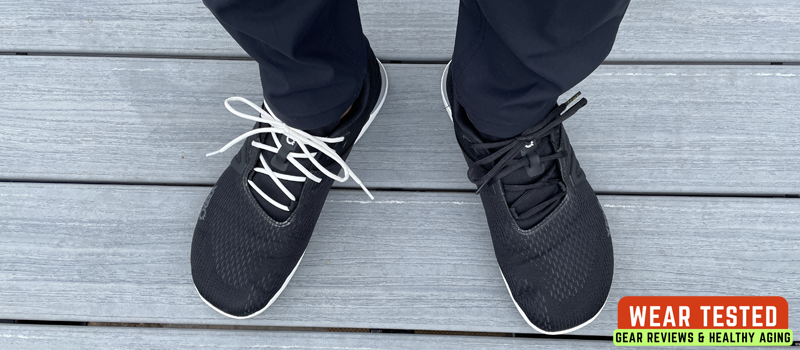
A quieter, lower-contrast colorway
Alongside the laces, a more muted colorway – deep charcoal, navy, or tonal black-on-black – would go a long way toward making the Pacer Lite double as a semi-formal shoe without a wardrobe change. The performance-shoe branding and high-contrast accents are great for the gym and the trailhead; they’re the first thing that gives it away at a more dressed-up event.
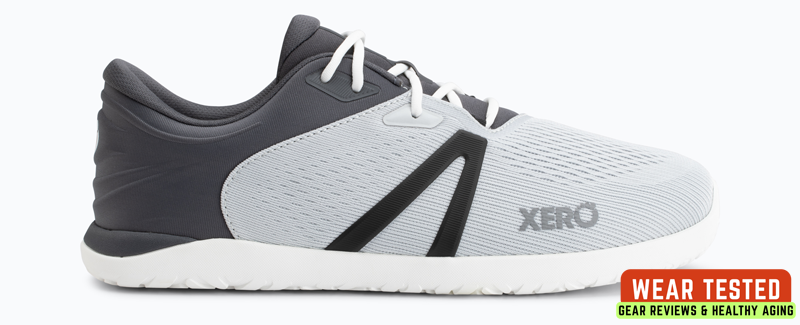
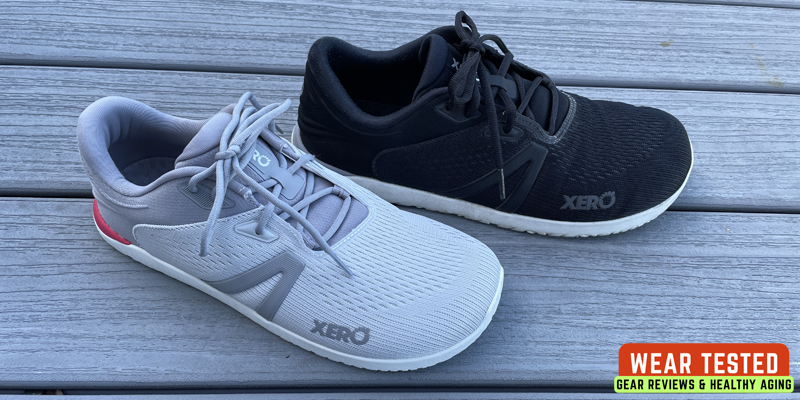
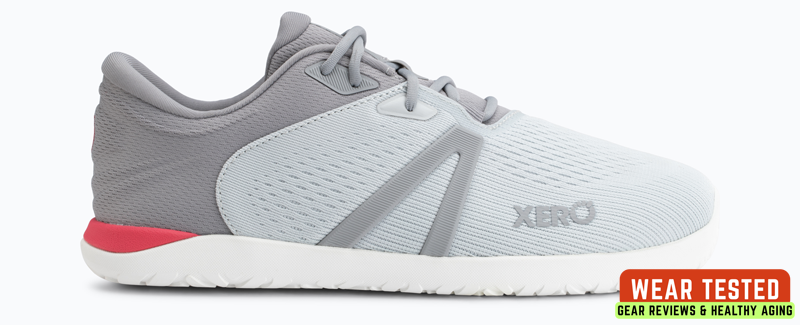
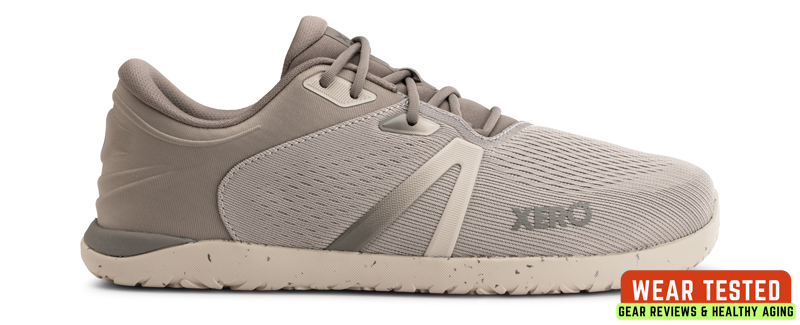
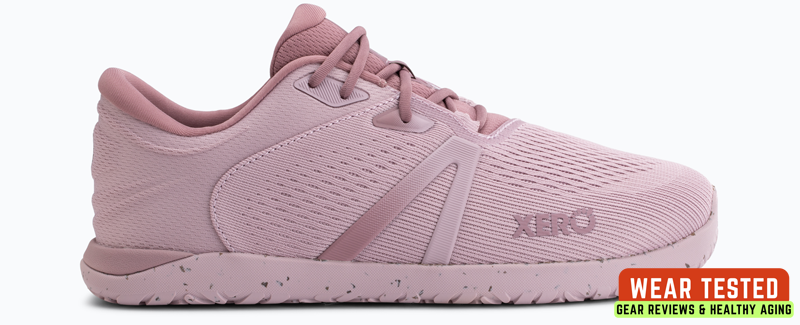
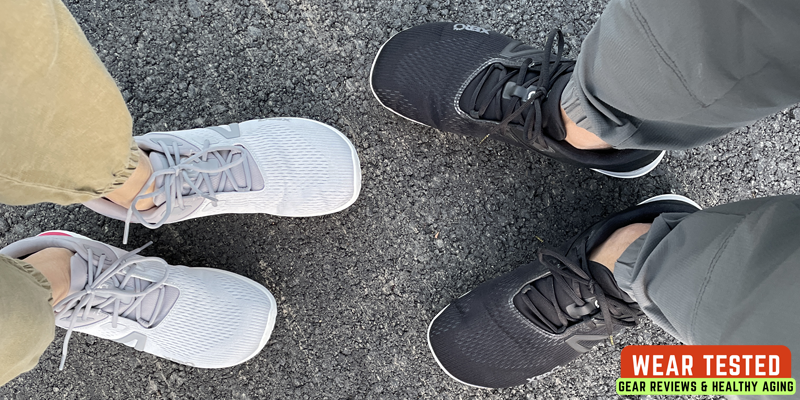
These are the currently available Pacer Lite colorways for Men (Black/White, Lunar Asphalt, Taupe) and Women (White/Black, Lunar Raspberry, Mauve).
Other small suggestions
- A weather-resistant treatment on the non-leather upper option, so the “formal” edition doesn’t have to be babied around rain or slush.
- A slightly narrower forefoot profile as a fit option for anyone who wants the same S-curve outsole and heel pad without as wide a footprint under dress pants.
- A resole or refresh program for the outsole specifically, since a shoe this comfortable earns enough daily miles that the tread will likely outpace the upper.
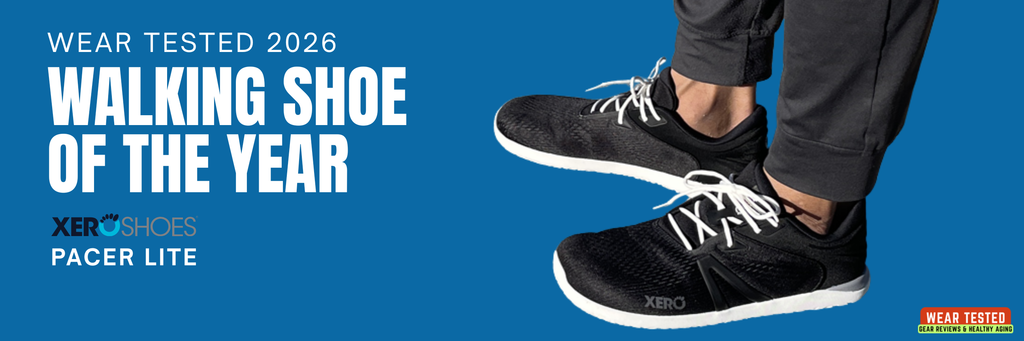
None of this is a knock on what the Pacer Lite already does well – it’s a sign that the shoe is good enough that we started imagining where else it could go. And for that reason, we are naming the Xero Shoes Pacer Lite the Wear Tested 2026 Walking Shoe of the Year!
Who Should Buy the Pacer Lite
Final Word
The Pacer Lite isn’t trying to be a running shoe, a boot, or a casual sneaker wearing a walking-shoe label. It’s built from the ground up around the actual biomechanics of a walking stride – the strike, brake, stabilize, and push-off sequence that traces that S-curve under your foot with every step. For walkers and ruckers who’ve felt the mismatch of training in gear built for a different movement entirely, that’s not a marketing detail – it’s the whole point of the shoe.
Whether your miles are walking miles – loaded or not – this is a shoe built around the stride you’re actually taking, not the one a running-shoe outsole assumes you’re taking.

Frequently Asked Questions (FAQ)
What is the “walk-gait S-curve” the Pacer Lite is built around?
It’s the path the center of pressure traces under a walking foot from heel strike to toe-off – moving from the outside of the heel, through the center of the arch at midstance, and back out toward the ball of the foot at push-off. The path curves rather than running in a straight line, giving it an S shape.
Is the Pacer Lite good for rucking?
Its design targets walking mechanics specifically, which is what rucking is at its core – loaded walking rather than running. The heel crash pad and outsole flex pattern are both built around the phases of the stride that matter most once you add pack weight.
Is the Pacer Lite a zero-drop shoe?
It follows Xero Shoes’ standard foot-shaped, low-profile platform philosophy, and zero-drop.
Do I need experience with minimalist shoes before trying the Pacer Lite?
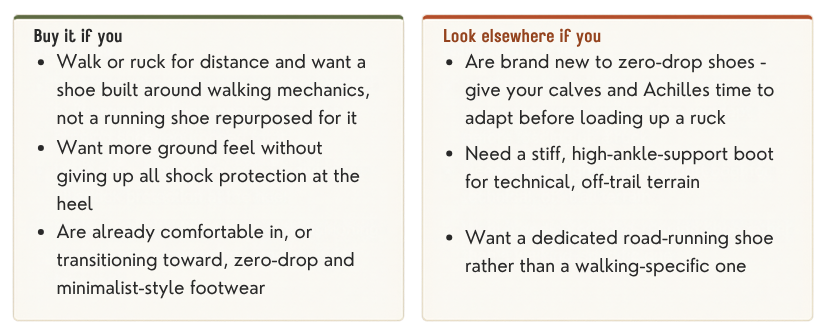
Not necessarily, but anyone new to zero-drop or low-stack footwear should transition gradually with shorter walks before loading up a ruck, to give the calves and Achilles time to adapt.