
TLDR;
The Altra Experience Wild 3+ is a 4mm-drop trail running shoe featuring Vibram MegaGrip outsole, Altra EGO P35 foam midsole, a reinforced toe bumper, and a redesigned heel collar for improved lockdown. At $160, it is $15 more than the base Experience Wild 3 (MaxTrac outsole), and roughly $15–20 more than the discontinued Experience Wild 2. It is the most capable and well-rounded shoe in the Experience Wild lineup to date – the upgrade from Experience Wild 2 is significant, driven primarily by the new foam, better grip, and improved fit.
Altra Running built its reputation on two things: wide, foot-shaped toe boxes and zero-drop geometry. The Experience Wild line breaks from that second pillar – deliberately. Launched as a 4mm-drop trail shoe, the Experience Wild was designed as an on-ramp: all the roominess of Altra’s FootShape last, but with a moderate heel lift to reduce the barrier to entry for runners transitioning from conventional footwear.

- Transitioning to Minimalist Shoes
- Altra Experience Flow 3 review
- Altra Lone Peak 9+ GTX review
- Altra Experience Wild 2 review
Three generations in, the Experience Wild 3+ is no longer just an entry point. It has become a genuinely competitive daily trail trainer, standing on its own merits against the HOKA Speedgoat, Topo Mountain Racer 4, and Altra Olympus. The “plus” in 3+ designates the premium Vibram MegaGrip outsole – the same rubber Altra Lone Peak 9+ uses – replacing the proprietary MaxTrac compound found on the base Experience Wild 3.
Midsole: EGO P35 Foam – The Most Important Upgrade
The single most consequential change from the Experience Wild 2 to the Experience Wild 3 (and 3+) is the midsole. The Experience Wild 2 used a compression-molded EVA blend (serviceable and reasonably cushioned) but prone to packing out over time – the foam felt noticeably flatter after a few months of regular use.
The Experience Wild 3 and 3+ swap that out for Altra EGO P35 foam, the same compound used in Altra’s maximal road shoe, the FWD VIA 2. P35 is lighter and more energy-returning than the previous EVA, striking a balance between softness for long days on trails and enough firmness to stay stable on uneven ground.
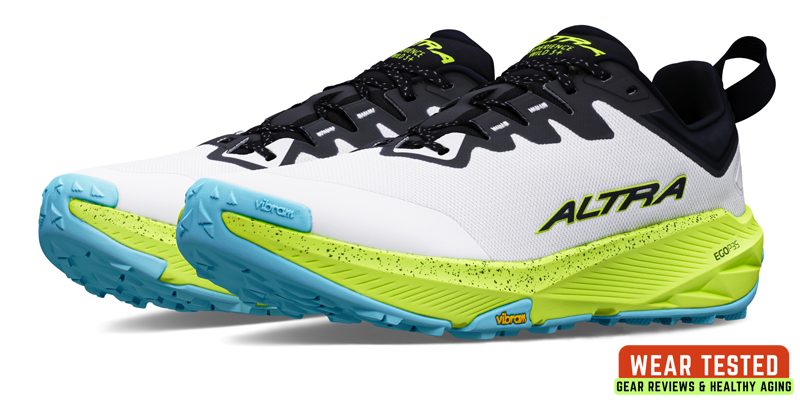
The stack height is unchanged: 32mm heel, 28mm forefoot – placing it in the high-cushion category. What has changed is what that foam actually does mile after mile – durability.
Outsole: Vibram MegaGrip – What “Plus” Actually Means
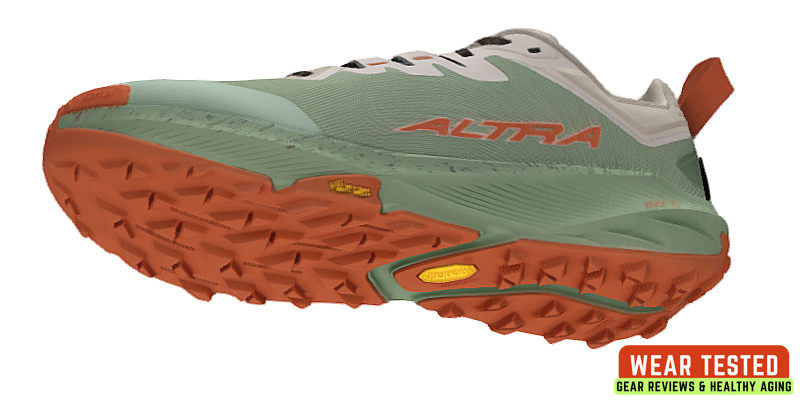
The Experience Wild 2 used Altra’s MaxTrac rubber – functional on dry hardpack, but notoriously poor in the wet. The base Experience Wild 3 retains MaxTrac. The Experience Wild 3+ ditches it entirely.
Vibram MegaGrip is the standard against which trail outsoles are measured. It grips wet rock, mud, and slick roots in a way MaxTrac simply cannot match.
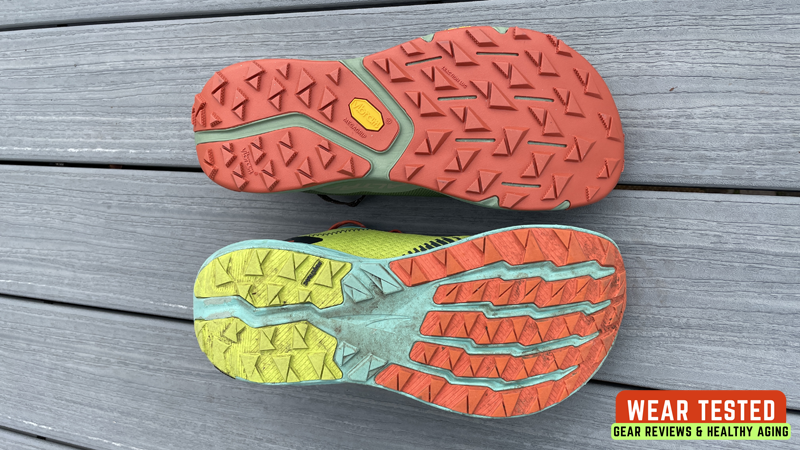
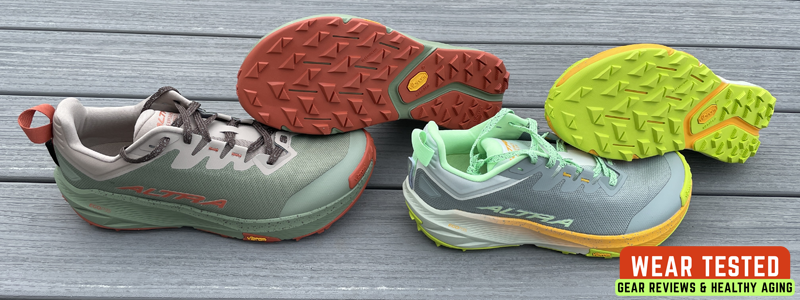
The lug depth is approximately 3.5mm – moderate, not extreme. This places the Experience Wild 3+ in hybrid territory: it handles dirt, gravel, packed singletrack, and moderate mud well, but is not the right tool for deep, churned mud or technical alpine scree. The lugs incorporate small traction nubs (similar to HOKA Speedgoat and Merrell Agility Peak), which improve braking friction on loose surfaces.
The outsole also wraps up and around the front of the shoe, forming a substantial toe bumper – a meaningful upgrade in rock and root protection compared to the Experience Wild 2’s more minimal toe guard.
Fit, Upper, and Heel Collar
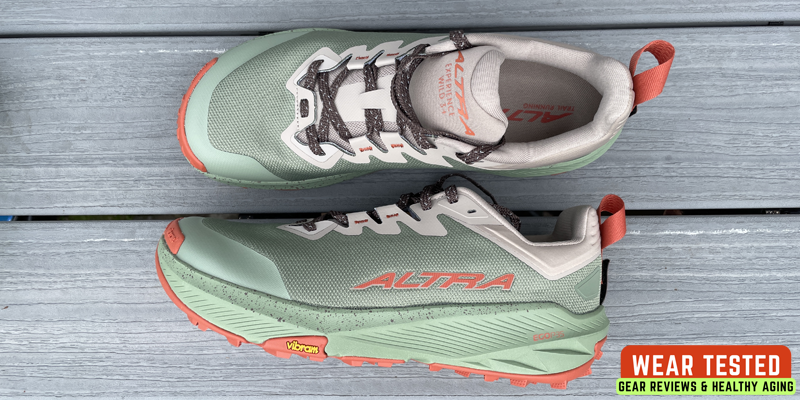
The Experience Wild 3+ uses what Altra calls the Standard FootShape last – their slimmer option, but still with a distinctly wide toe box compared to conventional trail shoes. The forefoot is roomy enough for natural splay without feeling sloppy or loose. The midfoot tapers to a secure, intentional hold, and the heel – where the Experience Wild 2 sometimes disappointed – has been substantially redesigned.
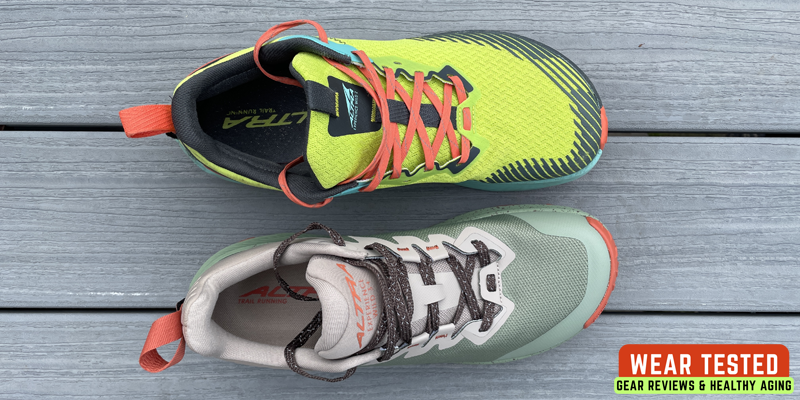
The new heel collar sits taller and is more structured than the Experience Wild 2’s, and the Achilles padding has been upgraded. One caveat: the taller, more reinforced heel collar may chafe on your Achilles – I haven’t experienced that even sockless.
The upper mesh is a burlier, open-weave engineered mesh – more trail-appropriate than the tightly woven fabric on its road sibling, the Experience Flow. There is a gusseted tongue that blocks debris effectively, though this comes at a cost: it adds a second fabric layer at the instep that noticeably increases heat retention. In warm conditions this may be a consideration for long efforts.
The shoe runs true to size. The toe box rounds generously over the lateral side of the forefoot, giving smaller toes more room than older Altra models. Flat, retro-reflective laces add a functional safety feature for early morning or evening trail running.
Ride Character and Terrain Versatility
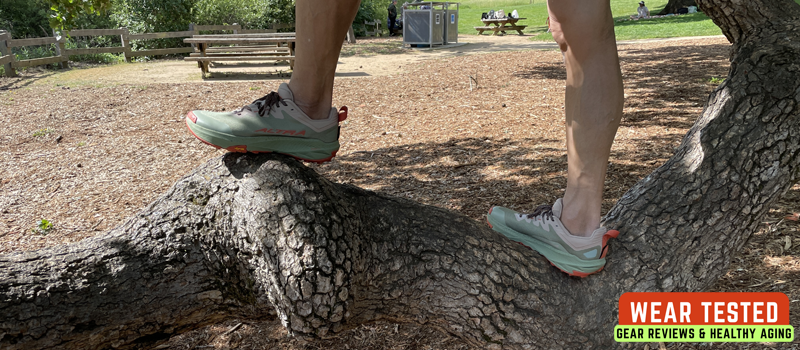
The Experience Wild 3+ falls into the “cruiser” category. It is not a speed-focused racer, nor is it designed for highly technical mountain terrain. What it does exceptionally well is make varied terrain feel effortless – road transitions, gravel, forest singletrack, light mud, snow, ice-hardpack – all handled with consistent confidence and comfort.
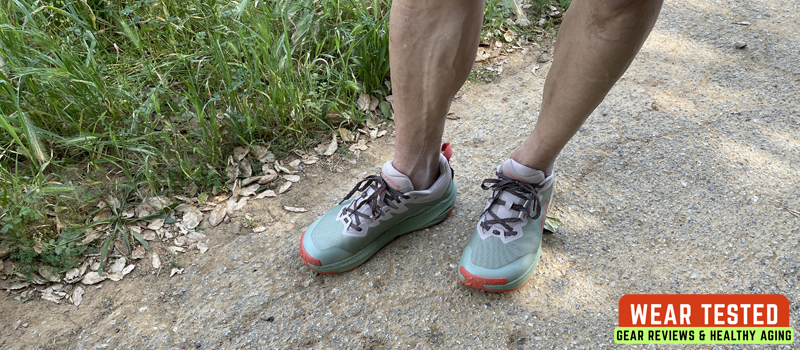
The Experience Wild 3+ is also a great rucking shoe, especially on slick & wet asphalt, concrete, and gravel – I use it for this more than hiking or trail running!
The 4mm drop, combined with Altra’s subtle rocker geometry, encourages a smooth forward transition. The ride rolls rather than propels – it is not a carbon-plated racer – but that efficiency makes it easy to run in for hours without thinking about the shoe. On mixed-surface days where you move from pavement to dirt and back, few shoes at this price point handle the transition as seamlessly.
Stability is a defining strength. The wide platform – a hallmark of Altra design philosophy – provides excellent stability on off-camber sections and gradual descents.
The rock protection is adequate without a rock plate. The full-coverage Vibram outsole and toe bumper mute sharp debris better than the Experience Wild 2, though on sustained rocky technical terrain, a higher-stack or rock-plated shoe remains the better choice.
Altra Experience Wild 2 vs. Wild 3+
| Feature | Experience Wild 2 | Experience Wild 3+ |
| Outsole | Altra MaxTrac | Vibram MegaGrip |
| Midsole Foam | Compression-molded EVA blend | Altra EGO P35 |
| Heel Stack | 32mm | 32mm |
| Forefoot Stack | 28mm | 28mm |
| Heel-to-Toe Drop | 4mm | 4mm |
| Weight (Men’s) | ~10.4 oz | ~11.4 oz (+1 oz for Vibram) |
| Lug Depth | 3.5mm | 3.5mm |
| Toe Box Width | Wide (FootShape) | Wide (FootShape) |
| Toe Bumper | Standard | Full coverage, reinforced |
| Heel Collar | Lower, softer | Taller, more structured |
| Heel Slip | Reported occasionally | Improved |
| Tongue | Standard mesh tongue | Gusseted, padded, plush (comfort) / Tradeoff (heat) |
| Breathability | Higher | Slightly reduced (gusseted tongue) |
| Foam Durability | Packs out after extended use | P35 retains loft better |
| Wet Traction | Weak (MaxTrac) | Excellent (Vibram) |
| Gaiter Trap | Yes | Yes |
| Heel Pull Tab | Standard | Oversized loop |
| Upper Mesh | Durable engineered mesh | Burlier open-weave mesh |
| Stability vs. Wild 2 | Baseline | Improved |
| Reflective Laces | No | Yes (retro-reflective thread) |
| MSRP | ~$140–$145 | $160 (+$15 vs base Wild 3) |
Should You Buy the Experience Wild 3 or Wild 3+?
The only meaningful hardware difference between the Experience Wild 3 and the Wild 3+ is the outsole: MaxTrac on the standard version, Vibram MegaGrip on the plus. The midsole, upper, fit, geometry, and everything else are shared. The 3+ weighs approximately one ounce more due to the denser Vibram rubber, and costs $15 more.
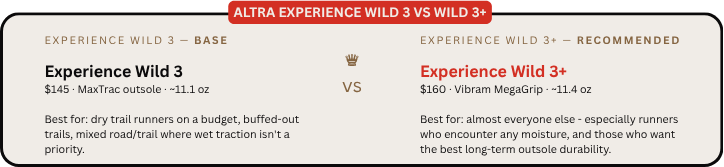
The $15 premium for Vibram is almost always worth paying. MaxTrac is functional in dry conditions, but the Wild line’s original weakness – poor wet grip and fast outsole wear – is now solved by the Vibram MegaGrip in the 3+. If you run year-round or in varied climates, the 3+ is the clear choice.
Final Verdict
The Altra Experience Wild 3+ is, simply put, the best shoe in the Experience Wild lineup to date – and a strong contender for the most well-rounded trail shoe Altra currently makes. The three improvements that matter most are all present: better foam, Vibram grip, and improved fit lockdown. Together, they transform what was capable-but-flawed shoe (Experience Wild 2) into one that is genuinely hard to fault for its intended use case.
It will not win a race on technical alpine terrain, and it won’t keep your feet cool on a hot summer ridge. But as a daily trail trainer that handles road-to-trail transitions, mixed conditions, and long mileage weeks with comfort and confidence – at $160 – it is difficult to recommend against.
For Experience Wild 2 owners: the upgrade is worth it.
For new Altra buyers: this is the Experience Wild to start with.
The Experience Wild 3+ is available on Altra Running’s website and at major running specialty retailers.
Frequently Asked Questions
Is the Altra Experience Wild 3+ true to size?
Yes. The Experience Wild 3+ runs true to size. The toe box rounds slightly more generously over the lateral side compared to older Altra models, giving smaller toes more room. Runners who are between sizes or have high Achilles insertions may want to consider sizing up half a size due to the taller reinforced heel collar.
What is the difference between the Altra Experience Wild 3 and Wild 3+?
The only difference between the Experience Wild 3 and Wild 3+ is the outsole. The Experience Wild 3 uses Altra’s proprietary MaxTrac rubber; the Wild 3+ uses Vibram MegaGrip. The 3+ weighs approximately one ounce more and costs $15 more. All other components – midsole, upper, geometry, and fit – are identical.
Is the Altra Experience Wild 3+ good for hiking?
Yes. The Experience Wild 3+ is widely used for both trail running and hiking. Its wide toe box, high cushion stack, and Vibram MegaGrip outsole make it well-suited for long trail days. The padded tongue and comfortable fit allow for extended time on feet without hotspots. It performs best on dirt, gravel, forest trails, and moderate terrain rather than technical scrambling.
How does the Altra Experience Wild 3+ perform in wet conditions?
Very well. The Vibram MegaGrip outsole on the 3+ provides excellent wet-surface traction – a significant improvement over the MaxTrac rubber used on the Experience Wild 2 and base Experience Wild 3. The shoe does not retain water after stream crossings, and traction holds under load on technical descents.
Is the Altra Experience Wild 3+ worth upgrading from the Experience Wild 2?
Yes – the Experience Wild 3+ is a meaningful upgrade from the Experience Wild 2. The improvements are substantial: the EGO P35 midsole replaces a foam that was known to pack out, the Vibram MegaGrip outsole fixes the original’s biggest weakness (wet traction), the heel collar is redesigned for better lockdown, and protection is improved with a full-coverage toe bumper. The only tradeoff is a slight reduction in breathability due to the gusseted tongue, and an extra ounce of weight.
Does the Altra Experience Wild 3+ have a rock plate?
No. The Experience Wild 3+ does not include a rock plate. The Vibram MegaGrip outsole and 32mm heel stack provide meaningful protection, and the full-coverage outsole mutes most sharp debris. However, on sustained rocky technical trails, runners who prefer maximum underfoot protection may want to consider a shoe with an integrated rock plate.