Walking the Peninsula Hills in Almost Nothing – Vivobarefoot Tracker Ora Sandal Review
Posted on
From Hillsdale High School up the hilly streets of Alameda de las Pulgas to Laurelwood Park and back – a Bay Area morning that tests every promise this minimalist sandal makes.
What Is The Vivobarefoot Tracker Ora Sandal?
The Tracker Ora is Vivobarefoot’s newest open-toe trail sandal – a barefoot-philosophy shoe stripped down to its essential purpose: connect your foot to the earth while giving you just enough protection to handle real terrain. It sits in a growing category of performance hiking sandals that try to bridge the gap between a casual strap sandal and a proper trail runner, without adding bulk.
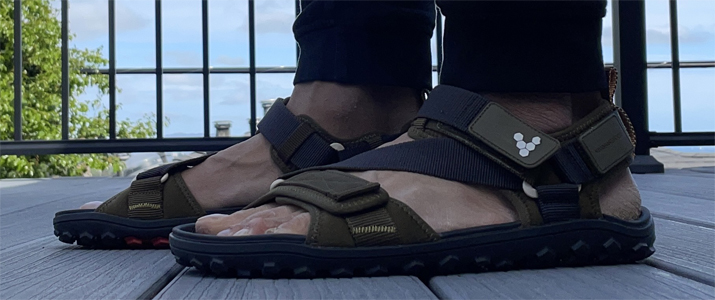
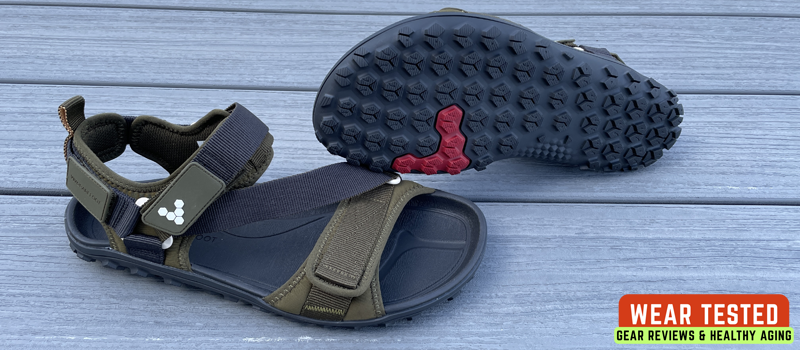
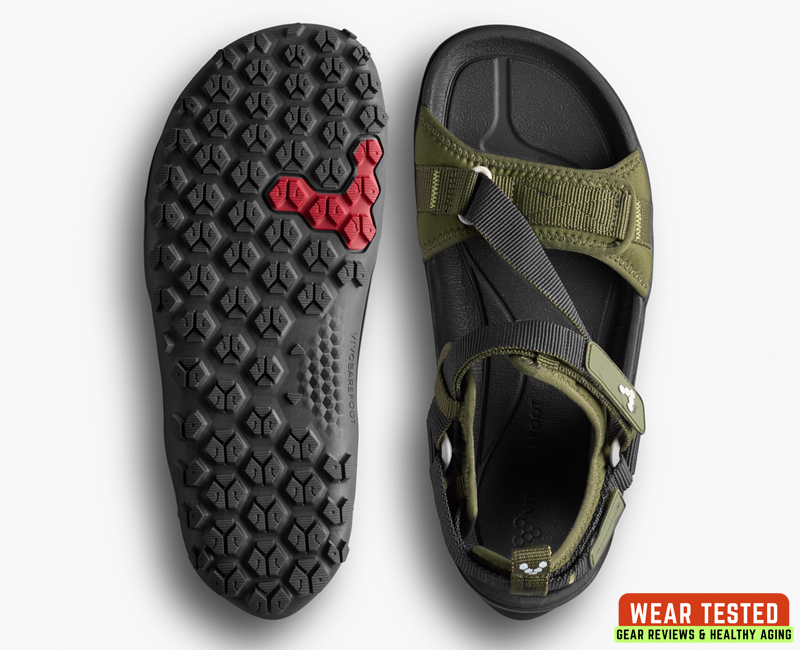
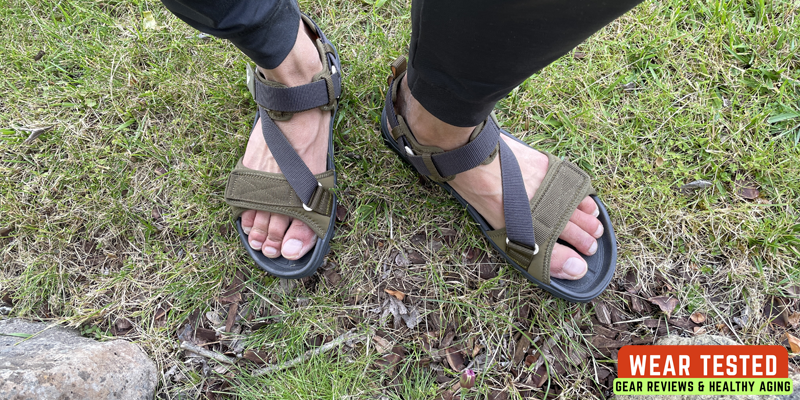
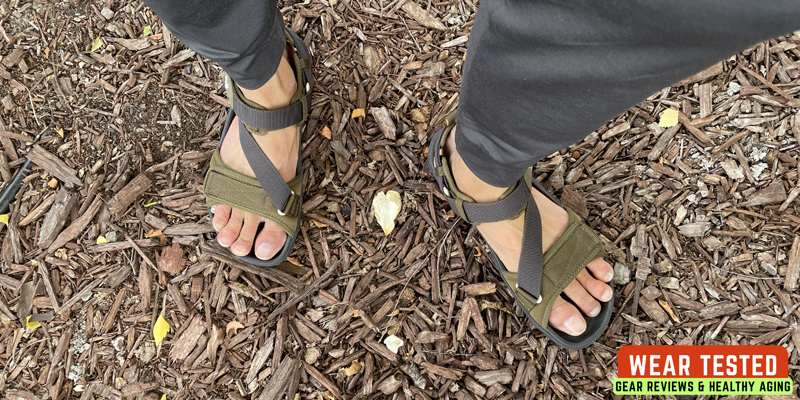
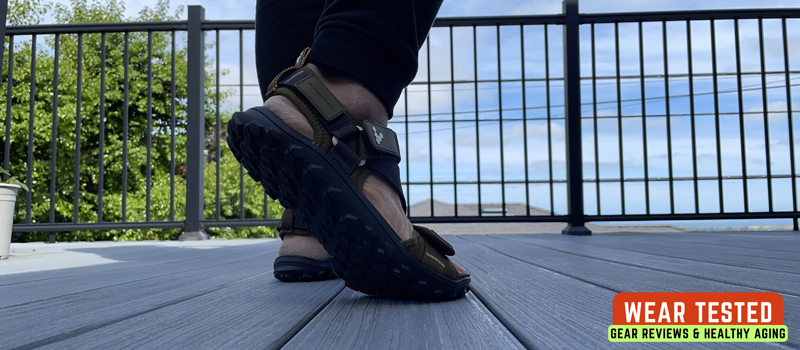
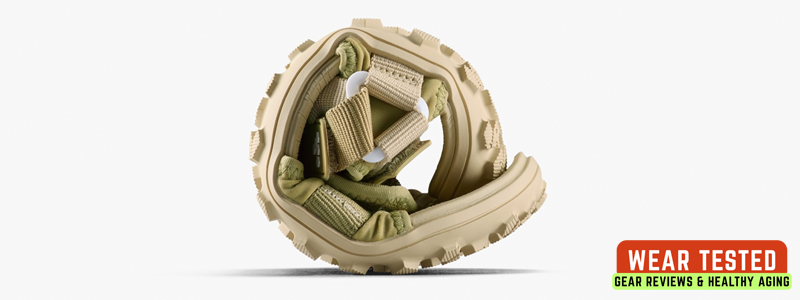
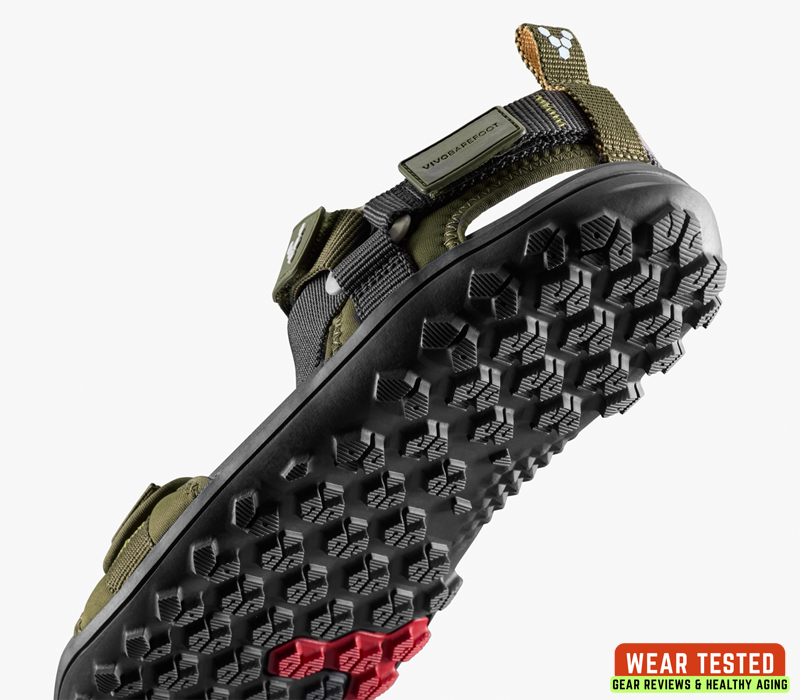
Where most trail sandals compromise on ground feel or stability, Vivobarefoot doubles down on both. The Tracker Ora is built on their proven All Terrain Tracker outsole and features a stretch neoprene upper, recycled polyester webbing, and a triple Velcro fastening system – details that sound simple until you’re scrambling across wet coastal scrub and every engineering decision starts to matter.
Technical Specifications
Vivobarefoot doesn’t pad their stats with meaningless numbers. Every spec on the Tracker Ora is in service of a single idea: your foot is stronger and smarter than any midsole foam can compensate for. The shoe’s job is to protect, grip, and get out of the way.
Specification
Detail
Price
$155
Sole base thickness
2.5mm – barefoot thin
Lug depth
4mm tread depth for varied terrain grip
Outsole
All Terrain Tracker, 50% natural rubber
Upper material
Stretch neoprene + recycled polyester webbing
Closure system
Triple Velcro-adjustable straps (3 zones)
Insole
None – maximum barefoot ground connection
Heel drop
Zero drop – true barefoot platform
Toe box
Wide, natural foot-shaped last
Vegan
Yes – all main materials are animal-free
Sizing
True to size
Best for
River crossings, sun trails, rocky coastal terrain
The absence of an insole is intentional and worth naming plainly. No insole means more ground feel – your proprioceptive nervous system gets an unmediated signal from whatever terrain is below. For barefoot purists, this is the feature. For those still transitioning to minimalist footwear, it’s a learning curve worth respecting.
Field Test – San Mateo, CA
An Hour from Hillsdale to Laurelwood and Back
It’s 7:50am on a Saturday morning in early May. The sky over central San Mateo is doing its Peninsula thing – fog sitting heavy on the hills to the west, a faint promise of sun somewhere above it. We’re lacing up – velcroing up – the Tracker Ora in the empty parking lot of Hillsdale High School on Del Monte Street. The school is quiet at this hour, the Knight on the gymnasium wall staring down at a pair of 2.5mm-soled sandals about to take on Alameda de las Pulgas. The route: north and west up Alameda, into the Sugarloaf-Laurelwood neighborhood, into the park itself, and back. About an hour. About 400 feet of elevation gain on the way out, all of it on real streets and real trail.
“Alameda de las Pulgas — the Street of Fleas — sounds like the last place you’d test performance hiking sandals. It turns out to be a perfect one.”
Cold Asphalt, Bare Rubber, First Impressions
Del Monte to Alameda, then west and immediately uphill through quiet mid-century residential streets. The 2.5mm sole reads every root-heaved sidewalk crack – that’s the point, not a complaint. The neoprene upper skips the cold-morning stiffness of webbing straps. Triple Velcro dialed in at the trailhead, stays put for the entire hour.
Where the Street Gets Serious
The grade builds steadily through dense fog, eucalyptus sharp in the air. Zero-drop means the calf and arch do the work a raised heel would hide. Turning onto Laurelwood Drive, the All-Terrain rubber grips the damp road camber with quiet, undramatic confidence.
The Fog Breaks. The Park Opens. The Sandal Gets Its Moment.
The Laurelwood Drive entrance trades pavement for 225 acres of oak woodland and chaparral. The fog burns off the ridgeline in real time. On hard-packed dirt, embedded rock, and dew-slicked trail under the oak canopy, the 4mm natural rubber lugs bite cleanly – and on loose decomposed granite near the Sugarloaf approach, you feel the surface shift before you need to react.
The Peninsula Earns Its Reputation
Sugarloaf ridgeline: fog gone, Bay visible, Crystal Springs Reservoir glinting to the northwest. Feet have been working – arch engaged, intrinsic muscles firing – without complaint. No trapped heat thanks to the open toe. The neoprene handles the fog-to-sun temperature swing without a hint of friction.
The Return: Where Sandals Either Hold or Betray You
Downhill is the honest test. The rearmost Velcro strap holds the heel firmly through the sustained Alameda grade without over-tightening; the forefoot strap prevents lateral drift on road camber. Back at Hillsdale High after 62 minutes: closures unchanged, zero hot spots (sockless), feet worked and ready to go again.
Why this specific route is a great sandal test: The Hillsdale–Alameda–Laurelwood loop delivers every surface challenge in a single hour: cold morning asphalt, sustained uphill grade, damp trail under oak canopy, loose decomposed granite, exposed ridgeline, and a long descent. The changing microclimate – fog to full sun – adds a real-world layer that no shoe lab can replicate. If a sandal handles this route comfortably, it handles the Bay Area.
Three Things Vivobarefoot Got Right
The triple Velcro system. Three independently adjustable straps – across the forefoot, midfoot, and heel – sounds like a premium feature and turns out to be a genuinely functional one. Each strap controls a different contact zone, meaning you can fine-tune forefoot width independently from heel security. For wide-footed barefoot wearers who’ve been let down by single-strap systems, this is the solution. For anyone crossing terrain that changes mid-hike, it means tightening on the move without stopping to re-thread anything.
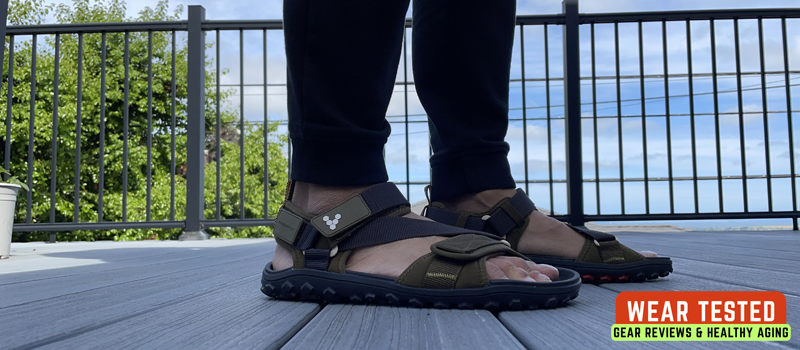
The neoprene upper. Stretch neoprene is an unusual choice for a trail sandal and it works better than expected. It conforms to the foot rather than cutting into it, tolerates water with complete indifference, and creates no hot spots (sockless of course) even when the sun comes out. The break-in period is essentially zero – the material gives on the first step rather than requiring the foot to shape the strap over time.
No insole as a feature, not a cost-cutting move. This is the most important design decision in the sandal. Vivobarefoot explicitly builds the Tracker Ora without an insole to maximize ground feel. The 2.5mm sole base is thin enough to transmit terrain texture directly to the sole of the foot. For anyone who’s been working to strengthen their feet and improve proprioception, this is not a compromise – it’s the entire point of the shoe.
The caveat: price. At $155, the Tracker Ora sits in premium territory for a sandal that, by design, contains very little material. You’re paying for engineered rubber compound quality, sustainable sourcing, and the Vivobarefoot brand ecosystem – 100-day trial, repair service, thoughtful last design. That’s a legitimate value proposition, but it’s a harder sell than comparable sandals from brands with lower overhead.
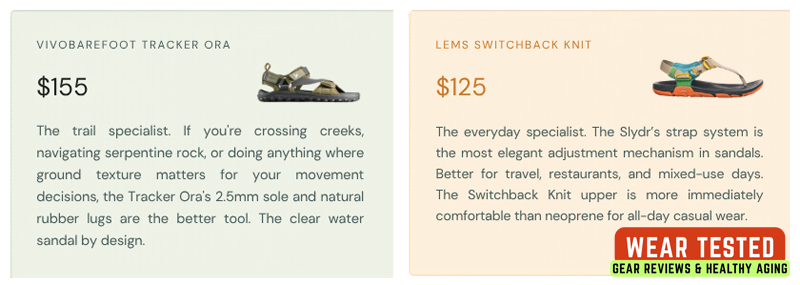
Vivobarefoot Tracker Ora vs. LEMs Shoes Switchback Knit
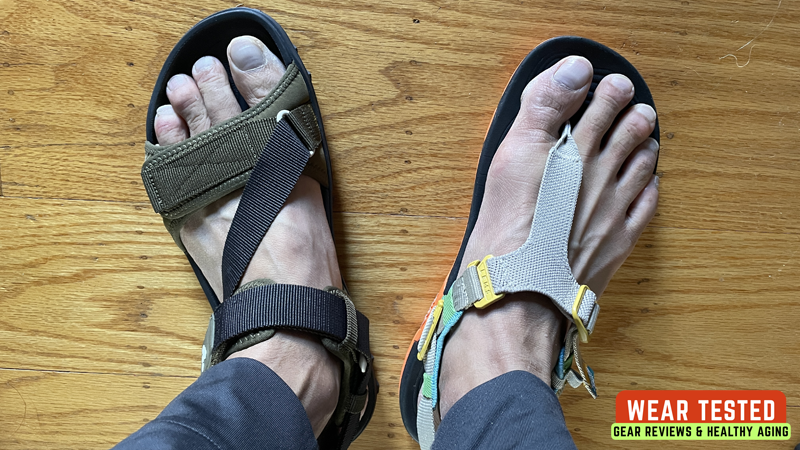
We’ve spent serious time with both of these sandals, and they represent two distinct philosophies in the minimalist sandal space. The LEMs Switchback – which we called the most innovative minimalist sandal we’d ever reviewed when the original launched in May 2025 – and its April 2026 Knit variant ($125) share the same barefoot commitment as the Tracker Ora but arrive there through completely different engineering.
The original Switchback introduced the Switchback Slydr™: a single continuous piece of webbing routed through a custom hardware component that adjusts both heel and instep tension simultaneously with one pull – an elegantly minimal fastening system. The Switchback Knit builds on this foundation with a breathable knit upper that wraps the foot more like a sock, eliminating the edge pressure points that even the best webbing straps create. The knit version also delivers a zero break-in experience – literally comfortable from the first step.
The honest answer is that these sandals don’t compete head-to-head – they serve different primary contexts. The Switchback Knit’s 3mm drop and EVA midsole make it accessible to a broader range of foot-strength levels, including people earlier in their minimalist footwear journey. The Tracker Ora assumes your feet are already conditioned to do real work with minimal mediation. Both are genuinely excellent at what they’re designed for. Pick the Tracker Ora for a full weekend of Bay Area trail hiking. Pick the Switchback Knit for a two-week trip that includes trails, cities, restaurants, and beaches.
Who Should Buy the Vivobarefoot Tracker Ora?
Buy the Tracker Ora if: You’ve been wearing minimalist footwear for at least a year, and your feet are conditioned for zero-drop, no-insole ground contact. You hike regularly on technical terrain – loose rock, root-crossed trail, seasonal creek crossings. You want a sandal that treats warm-weather hiking as a serious athletic activity, not a casual stroll. You value the environmental story: natural rubber, recycled polyester, vegan construction, Vivobarefoot’s repair service, and their 100-day trial.
Look elsewhere if: You’re new to barefoot footwear and haven’t yet built the foot strength to manage extended hikes without cushioning. The 2.5mm sole with no insole will punish undertrained feet on rocky terrain, and the transition needs to be gradual. Also consider alternatives if your primary use is urban and casual – the Tracker Ora is technically overbuilt for city sidewalks, and you’ll find better value in the Switchback Knit or a lighter Vivobarefoot lifestyle sandal for everyday wear.
The 100-day trial matters here. Vivobarefoot’s no-questions-asked return policy exists precisely because the brand understands that barefoot footwear is a transition that doesn’t work for everybody immediately. Use it.
Final Verdict
Sixty-two minutes from Hillsdale High School up Alameda de las Pulgas, through the oak canopy and decomposed granite of Laurelwood Park, to the Sugarloaf ridgeline and back – that’s enough to know whether a sandal has earned its place in the rotation. The Vivobarefoot Tracker Ora earns it convincingly, provided you bring the foot strength the sandal demands in return.
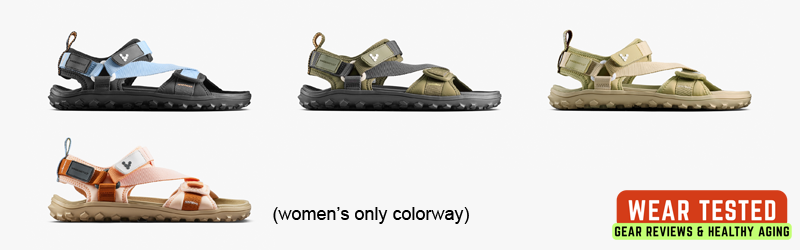
The All-Terrain outsole is the best rubber we’ve felt on a sandal at this price tier. The triple Velcro system solves the real-world problem of fit security on varied terrain without the complexity of threading and re-threading. The neoprene upper makes water a complete non-issue. The Dark Olive colorway is quietly beautiful in the kind of environment these sandals were made for.
Use 20% OFF Discount Code: WELCOME20
At $155, the price requires the Tracker Ora to be excellent – and it is exactly where it’s supposed to be. This is a trail sandal that respects the intelligence of your feet. It asks something of you. On a foggy Saturday morning on the California coast, with the Bay in the distance and wet rock underfoot, that felt like exactly the right bargain.
“The Tracker Ora doesn’t protect you from the trail. It equips you to experience it fully. There’s an important difference between those two things.”
Shop the Vivobarefoot Tracker Ora Sandal (Men’s, Dark Olive): vivobarefoot.com – $155, true to size, 100-day return policy, free shipping.