
This is the brand new 2026 ACSM Position Stand on Resistance Training — the first major update in 17 years.
The overarching message: consistency beats complexity
The first major update to resistance training guidelines in 17 years delivers one clear message: any amount of resistance training improves strength, muscle size, power, and physical function. The Position Stand synthesized findings from 137 systematic reviews representing more than 30,000 participants, making it the most comprehensive evidence-based guidance to date.
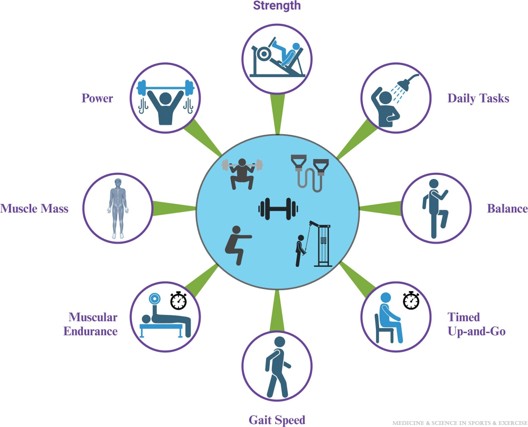
Seven Key Findings
1. Any training beats no training. A key takeaway is that the biggest benefits often come from a simple starting point – transitioning from no resistance training to any regular activity can lead to meaningful improvements.
2. Train all major muscle groups at least twice a week. The lead author puts it plainly: “Training all major muscle groups at least twice a week matters far more than chasing the idea of a ‘perfect’ or complex training plan. Whether it’s barbells, bands, or bodyweight, consistency and effort drive results.”
3. Individualization over rigid rules. Programs should be individualized based on personal goals, enjoyment, and safety to maximize long-term adherence. If a program is too demanding to maintain, it loses its effectiveness.
4. You don’t need a gym. One of the greatest changes is the recognition that meaningful results don’t require a gym – elastic bands, bodyweight training, and home-based routines offer clear and measurable improvements in strength, muscle size, and functional performance.
5. Many “advanced” techniques are optional. Training to fatigue or momentary muscle failure, using specific types of equipment (machines vs. free weights), and complex periodization did not consistently impact outcomes for the average healthy adult.
6. Hypertrophy isn’t locked to one rep range. The 2026 position stand specifically notes that hypertrophy was not meaningfully changed by loads ranging from low to high when effort was sufficient. This widens the on ramp considerably for people without access to heavy equipment.
7. Power training deserves attention too. The ACSM update highlights moderate loads, lower volume, and intentional fast concentric intent for power development – meaning speed and intent matter, not just how much weight you move.
The bottom line is a significant shift away from prescriptive, gym-centric programming toward an adherence-first framework. For general health, the evidence now strongly supports that doing something consistently outweighs optimizing variables like load, volume, or periodization scheme.

The non-negotiable: just start
For older adults and clinical populations specifically, the most important prescription variable across all 137 reviewed studies is simply showing up. Age is never a disqualifier – the evidence is unambiguous on this.
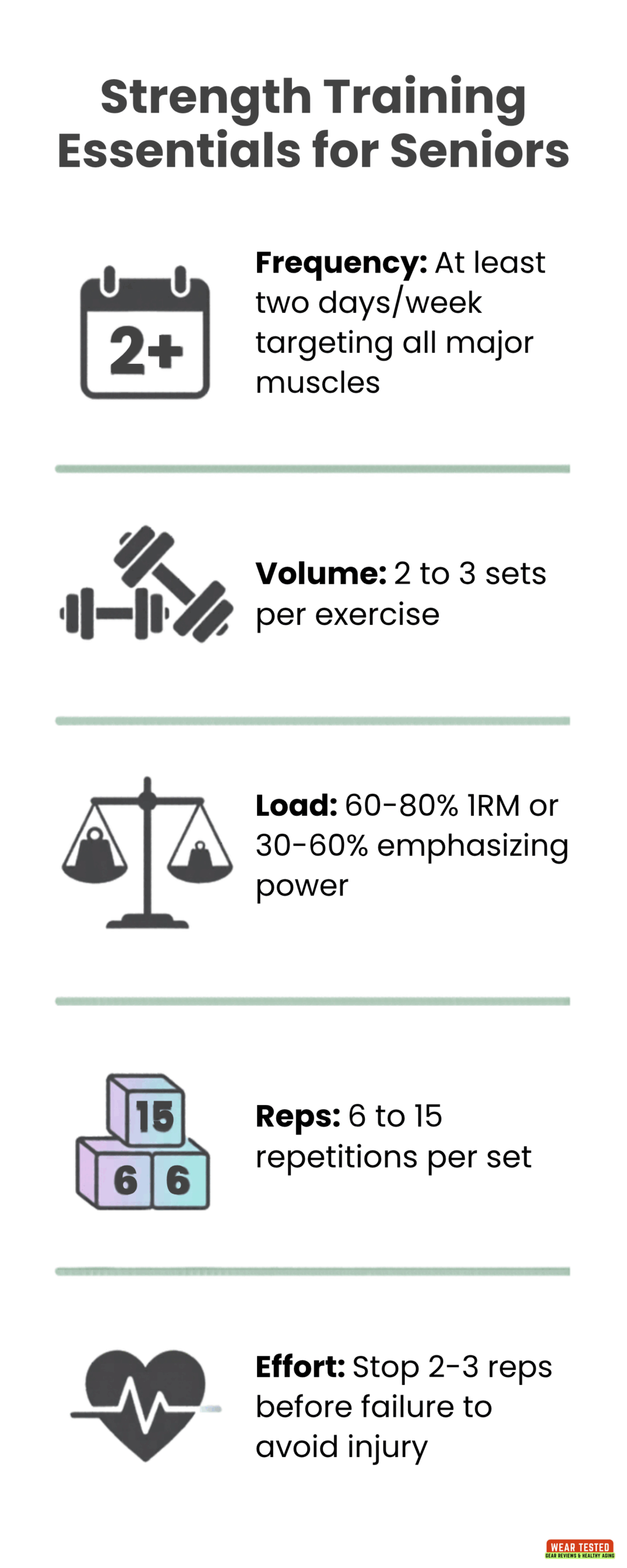
Five Core Prescription for Seniors
- Frequency: At least two days per week, targeting all major muscle groups.
- Volume: 2 to 3 sets per exercise.
- Load: Heavier loads of 60–80% of 1-rep max work well, or lighter loads of 30–60% 1-RM to emphasize power development – both are appropriate.
- Reps: Anywhere from 6 to 15 repetitions per set.
- Effort level: Stop 2 to 3 reps before failure – training to momentary muscular failure does not enhance strength or hypertrophy, and in older adults form breakdown under maximal fatigue carries meaningful injury risk.
Power Training is Critical for 60+
This is one of the most important updates for seniors. Relative muscle power is a stronger predictor of mortality than strength, and the 2026 Position Stand now provides explicit guidance to build it. The recommendation is to include at least one power-focused movement per session – such as fast chair stands, step-ups with intent, or controlled jumps if appropriate.
The benefits of power training for older adults extend to physical functioning, cognitive health, psychosocial well-being, executive function, and resistance to falls and other catastrophic events.

- Rebuilding Muscle Mass with Strength & Power Training
- Exercise Program for Rebuilding Muscle Strength, Function & Power Using Kettlebells
- Exercise Program for Rebuilding Muscle Strength, Function & Power Using Dumbbells
- Exercise Program for Rebuilding Muscle Strength, Function & Power Using Bodyweight
Equipment Doesn’t Matter – Consistency Does
Whatever gets older adults interested in and consistent with strength training is the right approach – mixing in balance and functional exercises alongside strength work is encouraged, essentially getting two or three benefits from one session. Elastic bands, body weight, and home-based routines all produce measurable improvements in strength and function.
Bottom Line
Resistance training twice a week, all major muscle groups, 2–3 sets of 6–15 reps at moderate-to-high effort (but not to failure), with at least one explosive/power movement per session. The specifics matter far less than the habit.