
Two lenses. Four disciplines. Zero compromises – or are there?
There is a particular moment every serious outdoor athlete knows well – that blinding second when the sun crests a ridge on mile eighteen of a trail run, when the road ahead turns to liquid chrome during a criterium descent, or when the dawn light hauls itself over a mountain pass just as you’re three hours into a ruck with forty pounds on your back. In those moments, your sunglasses stop being an accessory and become a survival tool. Adidas knows this. And with the 2025/26 Sport Eyewear collection, the brand has delivered two distinct answers to the question of what a performance sunglass should be: the sleek, ventilated ANEMOS LIGHT S (SP0116) and the workhorse, glare-crushing PRFM SHIELD (SP0076).
Both glasses emerge from Adidas’ long-running performance line, manufactured in partnership with Marcolin S.p.A., one of the world’s elite eyewear producers. Both share a foundation of injected plastic construction, UV400 protection, and the brand’s commitment to athletic fit. But beyond those commonalities, they diverge significantly in philosophy, intended athlete, and real-world performance across different disciplines. This review puts them head-to-head across four demanding activities – running, cycling, hiking, and rucking – to determine which is the right tool for which job, and whether either can genuinely claim all-rounder status.
DESIGN & CONSTRUCTION
In the Hand – and on the Face
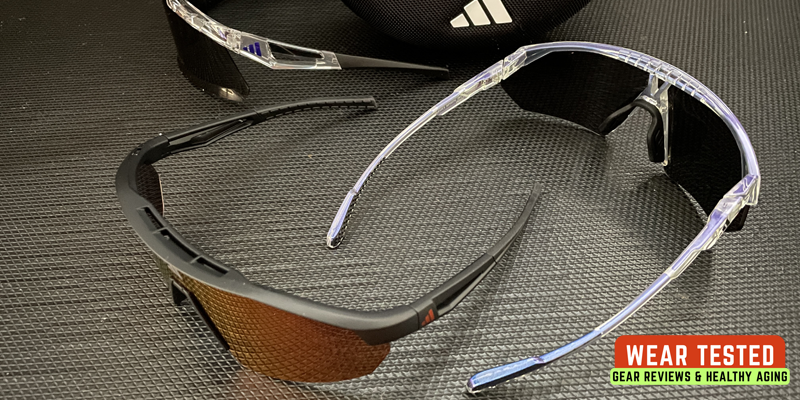
Pick up the ANEMOS LIGHT S and the first thing you notice is how intentionally minimal it feels. The frame sits in that rare intersection of “athletic instrument” and “something you wouldn’t mind wearing off the trail.” The injected acetate construction gives it a clean, premium feel – slightly warmer to the touch than the utilitarian plastics found on pure race gear. The cylindrical shield lens is housed in a semi-rimless design, lending it an open, airy visual profile that instantly communicates speed. What Adidas has smartly integrated are ventilation ports cut directly into both the front frame and the temples. On a humid headlands run or a loaded ruck, that airflow matters.
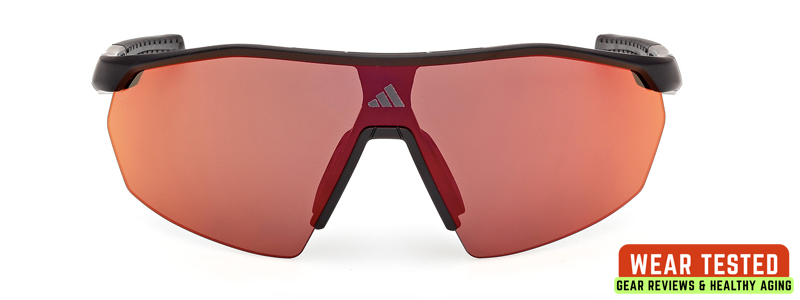
The adjustable rubber nose pads are worth calling out explicitly. They sit high and firm without creating pressure points during multi-hour efforts, and the adjustability means the fit can be dialed across a range of face shapes. The temples lock against the skull with just enough grip to prevent migration, even through aggressive head-bobbing cadence runs. The three-bar Adidas logo is etched cleanly into the temples and centered on the lens – brand identity that doesn’t scream.
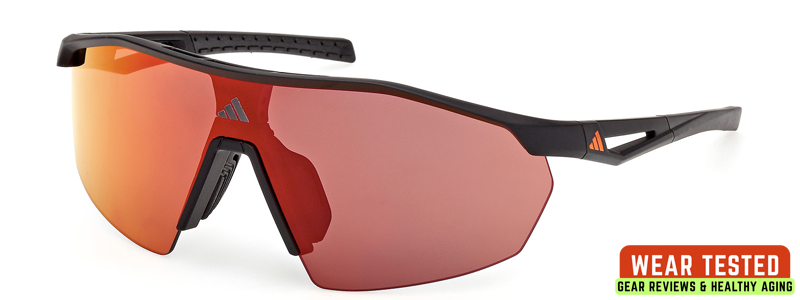
The PRFM SHIELD communicates a different story. It’s heavier in the hand – not dramatically so, but you feel it. The full injected plastic construction prioritizes resilience over refinement. This is the pair you grab when the weather forecast is uncertain, when the terrain is technical, and when you genuinely cannot afford your eyewear to fail. The shield geometry is more aggressive – a wider, deeper wrap than the ANEMOS LIGHT creates a more complete visual field while simultaneously offering better lateral protection from wind, debris, and peripheral light intrusion. The anti-fog coating on the lens is a genuine differentiator, and the polarized variants elevate it to genuine glare-elimination territory. The rubberized nose pads are equally adjustable, though the overall fit runs slightly larger – better for athletes with medium-to-broad facial structures.
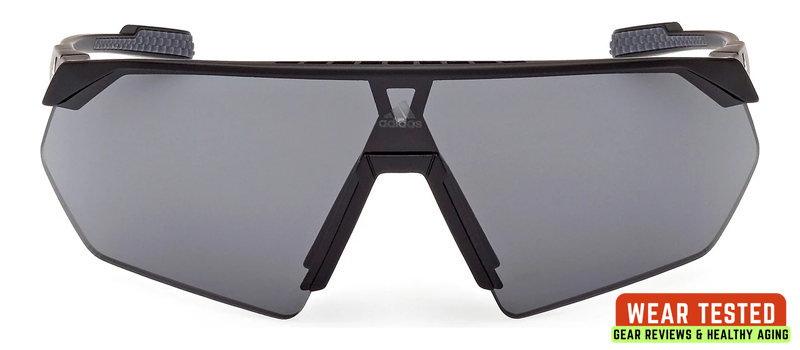
The ANEMOS LIGHT is the sunglass you fall in love with at the trailhead. The PRFM SHIELD is the one that gets you home.
FINAL TESTING
Discipline-by-Discipline Breakdown
Running
For road and trail running, the most critical performance metrics are stability under cadence, ventilation, and optical clarity in variable light. The ANEMOS LIGHT S earns its name honestly here. On long road runs into changing sun angles, the cylindrical lens delivers impressive distortion-free vision – no fisheye at the periphery, no barrel distortion as the angle of incidence shifts. The ventilation ports on the front frame proved effective: after forty minutes of tempo running in warm conditions, lens fogging was minimal to nonexistent.
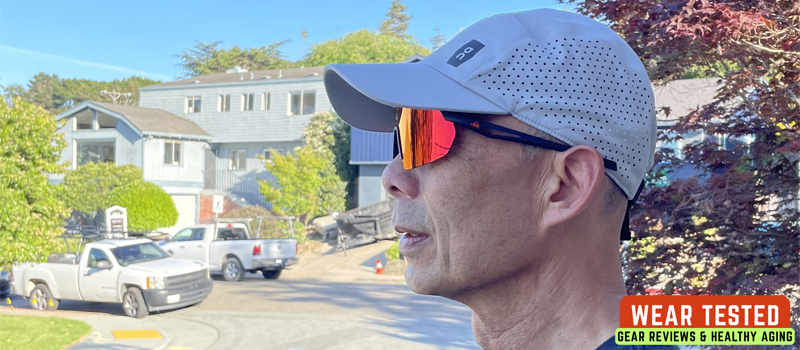
Where the ANEMOS LIGHT excels especially for running is the sheer wearability factor. The reduced dimensions of the “S” variant – caliber 136, temple 125mm – fit closer to the face without the cheekbone pressure that plagues some shield designs over long distances. The prescription clip-in compatibility is a massive bonus for runners who otherwise resign themselves to contacts.
The PRFM SHIELD, meanwhile, trades some of that featherweight comfort for confidence. On technical trail runs – loose scree, switchbacks, root-strewn singletrack – the wider lens coverage and anti-fog coating proved their worth. Polarized variants (in other colorways) eliminate trail surface glare decisively. The tradeoff is that the frame sits marginally heavier across the nose bridge over anything longer than a 10K.
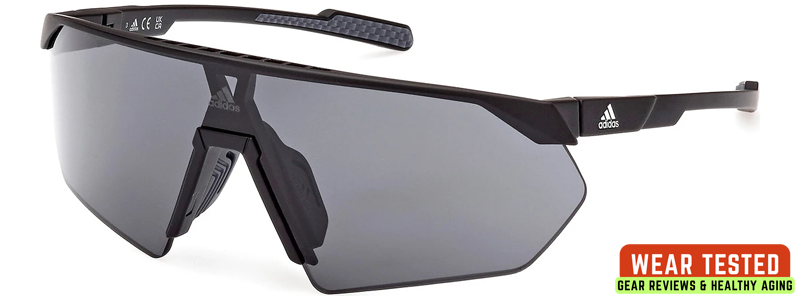
ANEMOS LIGHT S – Running Exceptional for roads, intervals, and tempo work. Light, ventilated, no cheekbone pressure at long distances. Best for XS–S face profiles.
PRFM SHIELD – Running Built for trails in challenging conditions. Anti-fog coating and polarization make it the rugged-conditions runner-up – literally.
Cycling
On the bike, wind resistance, optical stability at speed, and aerodynamics become paramount. Both glasses perform meaningfully better than casual sun wear, but they reveal their personalities on descents and headwinds. The ANEMOS LIGHT S, with its tighter, more form-fitting profile, creates minimal wind flutter. At 25+ MPH on a road descent, it stays planted and quiet – no rattling temple ends, no frame chatter in crosswinds. The cylindrical lens geometry at Base 6 keeps peripheral visual distortion low, which matters enormously when reading road surface changes at speed.
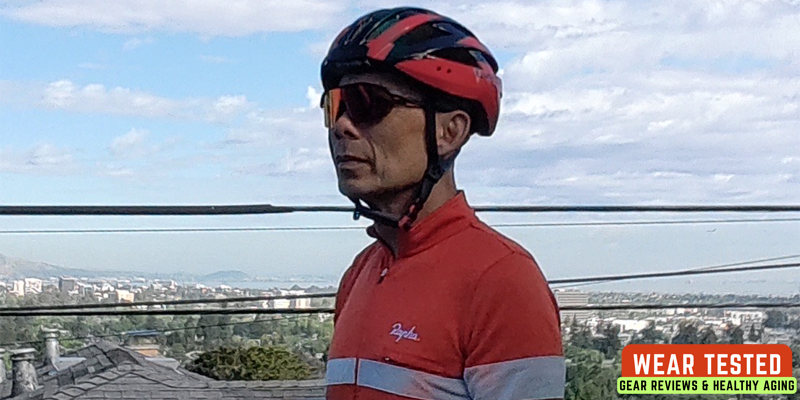
For road cycling and gravel riding specifically, the ANEMOS LIGHT is the cleaner recommendation. The photochromic lens variant (available in colorway 21X) is particularly compelling for rides that begin before dawn or end after dusk – the lens adapts to changing light instead of leaving you choosing between squinting and fumbling through a jersey pocket for a swap.
The PRFM SHIELD shows its strengths on mountain bike applications, cyclocross, and any riding context where debris is a threat. Its deeper lens coverage protects the eye more fully from roost, mud spray, and gnarly trail particulates. The anti-fog coating keeps vision clear through the thermal gradients of steep technical climbs followed by shaded descents – a scenario where many performance lenses ghost up at the worst possible moment. For MTB riders, the PRFM SHIELD is an honest recommendation.
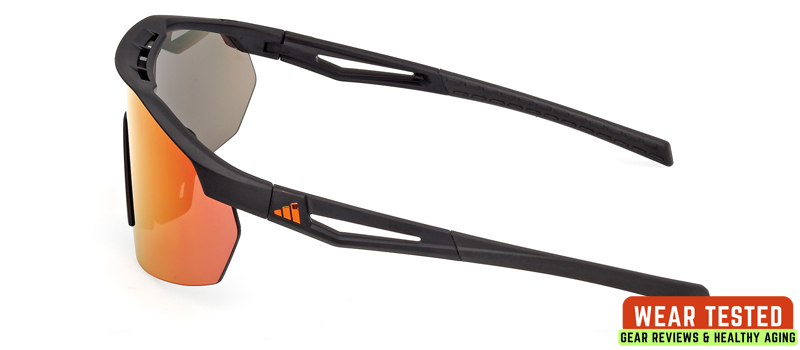
ANEMOS LIGHT S – Cycling Road and gravel’s best friend. Aerodynamic, optically clean, and the photochromic option handles dawn-to-dusk rides elegantly.
PRFM SHIELD – Cycling Mountain biking workhorse. Deeper coverage, anti-fog, and polarized options make it the technically demanding ride choice.
Hiking
Hiking demands a different kind of endurance from eyewear. You’re not asking for aerodynamic precision – you’re asking for all-day wearable comfort, UV protection across altitude gain, and adaptability to swinging weather patterns. Here, the two glasses flip roles in an interesting way.
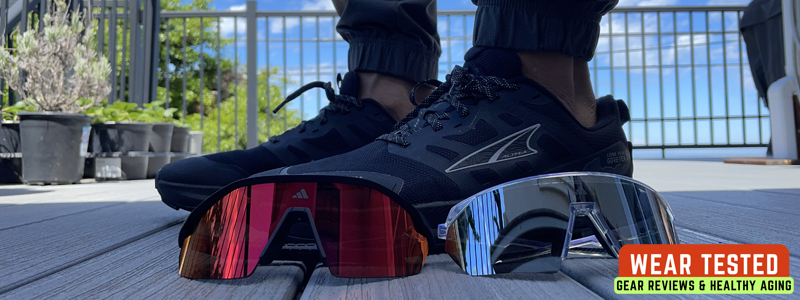
The ANEMOS LIGHT S becomes surprisingly compelling for full-day hiking precisely because of its weight and ventilation. After six hours ascending a ridgeline, the absence of facial pressure from a lighter frame matters. The adjustable nose pads can be set to prevent any slipping on sweat-slicked descents. The semi-rimless design is psychologically comfortable too – there’s less of a “tunnel vision” sensation over extended periods compared to full-wrap shields, which some hikers find fatiguing.
That said, above treeline, in high-alpine environments, the PRFM SHIELD’s UV400 coverage and wider lens profile become genuinely protective equipment. Snow-reflected UV radiation at elevation is not a hypothetical hazard – it causes photokeratitis. The PRFM’s broader lens coverage minimizes peripheral UV exposure from below and to the sides of the lens – a real consideration on snowfields, talus, and open ridgelines. For mountaineers and high-alpine day-hikers, the PRFM’s superior coverage wins the day.
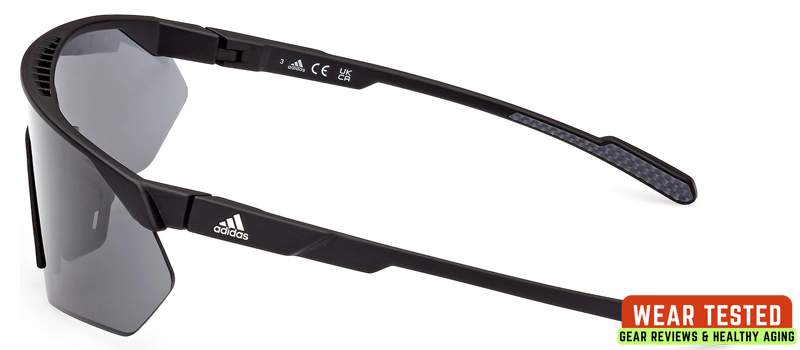
ANEMOS LIGHT S – Hiking All-day comfort king for forest and sub-alpine trail hiking. Light enough to forget you’re wearing it by hour five.
PRFM SHIELD – Hiking High-altitude, above-treeline, and snowfield terrain demand the PRFM’s broader coverage and UV protection geometry.
Rucking
Rucking is perhaps the most underrepresented discipline in performance eyewear reviews, despite its growing presence in military fitness culture, GORUCK training events, and functional fitness communities. Rucking makes unusual demands: you’re moving at a sustained, grinding pace for hours – sometimes overnight, sometimes through variable terrain, often with limited ability to adjust your kit mid-effort. Your eyewear needs to stay put, not fog, and protect your eyes across lighting conditions that range from harsh midday sun to amber dusk to headlamp darkness.
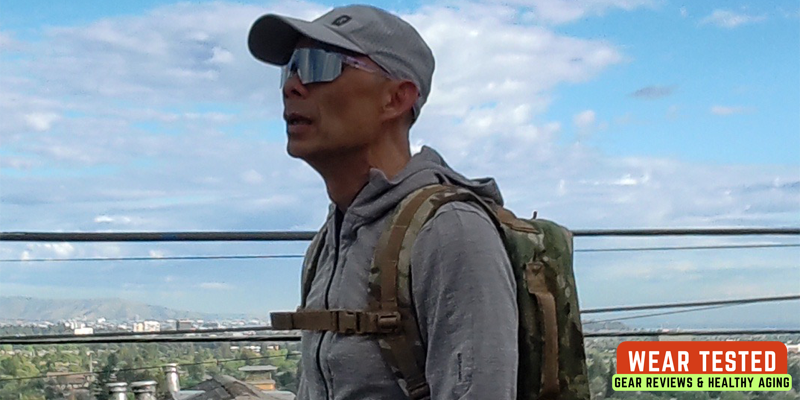
For rucking, the PRFM SHIELD is the authoritative recommendation. The anti-fog coating handles the thermal cycling from exertion heat to cool ambient air – a constant challenge during overnight or early-morning rucks. Its secure, full-coverage fit doesn’t migrate even under the head movement that comes with varying terrain and load. The rubberized nose pads grip better under sweat, and the two-year warranty speaks to a durability calculus that aligns with military-fitness-community expectations. Polarized variants eliminate road glare during pre-dawn ruck marches on wet pavement.
The ANEMOS LIGHT S isn’t wrong for rucking – its ventilation is genuinely valuable during sustained aerobic output with a loaded pack – but the PRFM’s combination of fog resistance, broader protection, and rugged construction edges it into “preferred” territory for this discipline specifically.
ANEMOS LIGHT S – ventilation and comfort for loaded carries. Ideal when the ruck is a training tool rather than a true field mission.
PRFM SHIELD – Rucking The dominant rucking pick. Anti-fog, wider coverage, superior wet-weather grip, and two-year warranty make it field-ready.
OPTICAL TECHNOLOGY
What’s Actually Happening in the Lens
Both models benefit from Adidas’ collaboration with Marcolin on what the brand calls HD Optics engineering – hydrophobic and oleophobic lens treatments that repel water, sweat, and fingerprint oils from the outer surface. In practice this means rain-hit lenses shed droplets rather than smearing, and post-run sweat that drips off your forehead doesn’t leave persistent blur. On a wet trail run or a misty morning ruck, this is not a small thing.
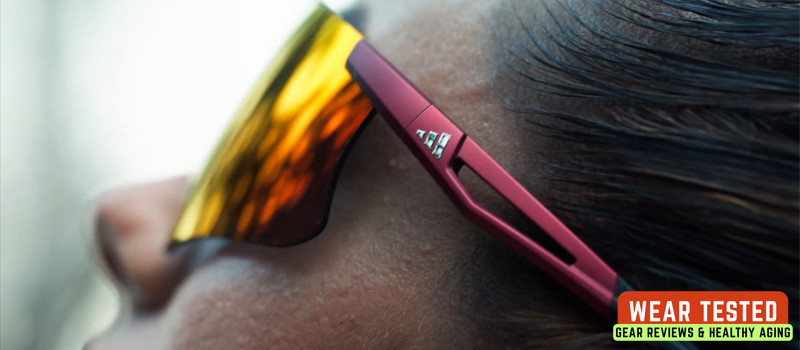
The ANEMOS LIGHT S uses a cylindrical lens at Base 6 curvature – a geometry that balances peripheral optical clarity with a relatively flat visual field across the horizontal plane. This suit runs and road cycle well, where your primary visual concern is a wide, level horizon rather than ground-level depth perception across broken terrain.
The PRFM SHIELD’s single-lens shield design with its ventilated lens surface takes a different approach. The emphasis here is on maximum uninterrupted field of vision – there is no frame interrupting your sightline anywhere in the primary visual field. In fast-moving environments – an MTB line call, a switchback descent on a hiking trail, the visual scan of urban terrain during a ruck – that uninterrupted visual continuity matters. The anti-fog coating on the interior lens surface addresses the moisture gradient that occurs when your body is generating heat and the ambient air is cooler, a scenario almost every athlete encounter on demanding outdoor efforts.
The polarized variants of the PRFM SHIELD (available in some colorways) filter horizontally oriented light waves – the primary component of glare from wet pavement, water surfaces, and high-reflectance terrain. For ruckers navigating urban environments in the rain, cyclists on damp road courses, and hikers crossing snowfields, this is meaningful technology rather than marketing vocabulary.
FIT & ERGONOMICS
The Long-Haul Fit Question
Any sunglass can feel fine for thirty minutes. The discipline is asking how it performs in hours three through six of a mountain ruck, or at the back half of a marathon when fatigue has loosened your form and your head is tilting more than you’d like. Both Adidas designs take ergonomics seriously, but they address the problem differently.
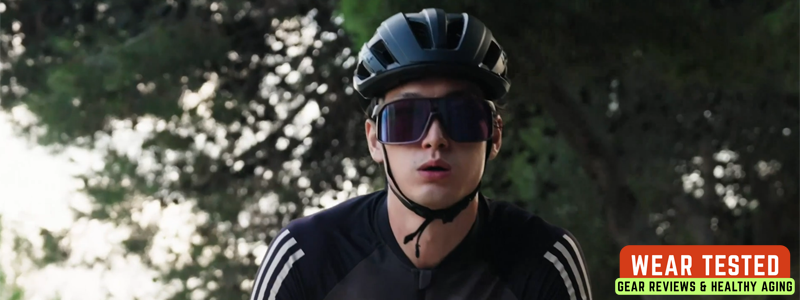
The ANEMOS LIGHT S’s smaller “S” caliber was specifically developed by Adidas to address the historically underserved population of athletes with narrower or smaller face profiles – a demographic that has long struggled to find performance eyewear that fits without sliding.
I’ve also tested the regular size ANEMOS LIGHT – it was just too big for my face to do justice testing with it, so I opted for the “S” version.
The adjustable rubber nose pads and rubber-tipped temples create a secure, padded interface that distributes pressure evenly. For athletes who have historically settled for “good enough” fit in performance eyewear, this represents a genuine step forward.
The PRFM SHIELD fits a slightly broader face profile without adjustment, making it the default fit for medium-to-large facial structures. Its temple length of 125mm is standard performance, and the adjustable nose pad system allows fine-tuning across the bridge. The rubberized contact points grip better as the athlete sweats – counterintuitively, the PRFM may actually become more secure during high-output efforts as perspiration increases rubber-skin friction.
Buy the ANEMOS LIGHT S if you…
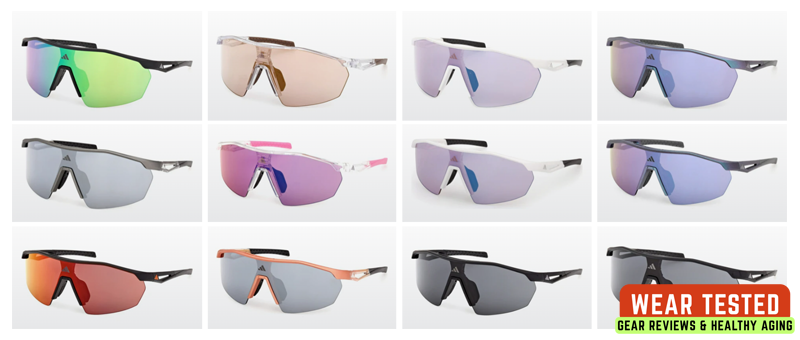
- Primarily run roads, trails, or track
- Do road or gravel cycling
- Have a narrower or smaller face profile
- Want prescription compatibility
- Want photochromic or mirrored lens options
- Prioritize all-day wearable comfort
- Ruck for training (not field missions)
- Value the newest 2025/26 design language
Buy the PRFM SHIELD if you…
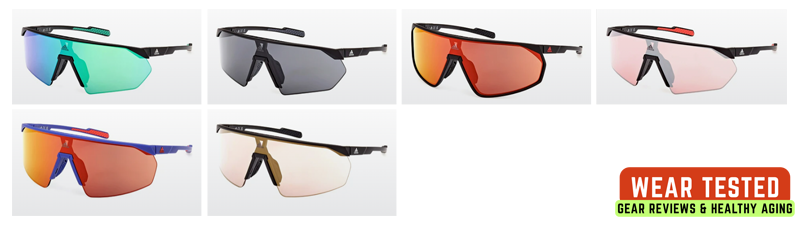
- Ruck seriously – overnight, tactical, GORUCK
- Mountain bike, cyclocross, or trail ride
- Hike above treeline or in snow
- Train in fog, rain, or extreme humidity
- Need polarization to eliminate glare
- Want two-year warranty coverage
- Have a medium or broader face
- Prioritize value ($124 vs $152 discounted)
Final Word
Adidas has not made an error with either of these glasses. What they’ve done – with purpose, it seems – is build two distinct philosophies into the same performance lineup. The ANEMOS LIGHT S (SP0116) is the athlete-friendly precision instrument: lighter, more refined, better ventilated, and now available with a photochromic option that makes it genuinely versatile across the full arc of a training day. If running and road cycling anchor your athletic week, it is the better lens.
The PRFM SHIELD (SP0076) is less interested in being elegant and more interested in keeping you functional when conditions deteriorate. Its anti-fog coating, polarization options, broader coverage, two-year warranty, and lower price point collectively make it the more rugged, field-ready tool. Ruckers, mountain bikers, high-altitude hikers, and anyone who regularly trains before sunrise or in weather they didn’t choose should reach for the PRFM first.
The ideal kit, for the athlete who refuses to compromise across all four disciplines, is one of each. The ANEMOS goes in the running vest. The PRFM goes in the pack. Both go on the face when the situation demands it.