Visceral Fat Impact On Healthspan & How to Get Rid Of It!
Posted on
The information contained in this article is for educational and informational purposes only and is not intended as health or medical advice. Always consult a physician or other qualified health provider regarding any questions you may have about medical conditions or health objectives.
Too much visceral fat increases the risk of dangerous health conditions and can significantly shorten your lifespan.
What is Visceral Fat?
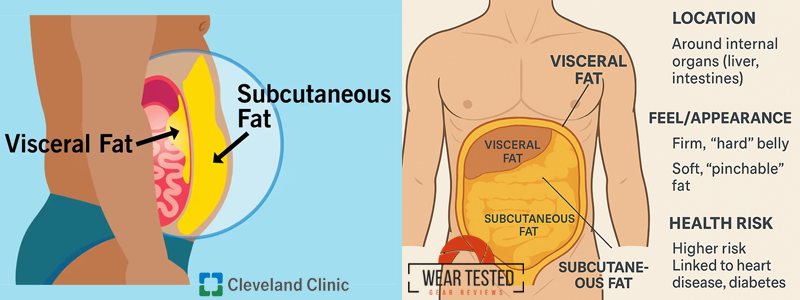
Visceral fat is a type of body fat that accumulates deep inside the abdominal cavity, surrounding vital organs such as the liver, pancreas, and intestines. Unlike subcutaneous fat (the fat stored under your skin that you can pinch), visceral fat isn’t as visible but is far more metabolically active and dangerous. It releases inflammatory molecules and hormones that can disrupt normal body functions.
Impact on Longevity
The accumulation of visceral fat is strongly linked to increased risks for cardiovascular disease, type 2 diabetes, cancer, and chronic inflammation (sometimes called “inflammaging”). Recent research has shown that higher levels of visceral adiposity index (VAI) are independently associated with premature death; for example, women in the highest quartile of VAI could lose up to 3.33 years of life expectancy, while men could lose 1.24 years. A recent large analysis shows the negative health effects of increased waist circumference, a marker of visceral fat. Chronic inflammation resulting from visceral fat also contributes to atherosclerosis, insulin resistance, and a higher risk of age-related diseases, further reducing both lifespan and healthspan.
Why Visceral Fat Is Especially Harmful
Visceral fat is highly active metabolically, releasing free fatty acids and pro-inflammatory cytokines directly into the portal circulation, which disrupts glucose homeostasis and accelerates insulin resistance.
Chronic inflammation from visceral fat increases the risk of developing cardiovascular disease, type 2 diabetes, and several cancers.
Excess visceral fat can cause hormonal imbalances that affect appetite, metabolism, and even promote tumor growth.
Best Ways To Reduce Visceral Fat (based on Science)
Recent scientific studies from the last three years reveal that the most effective ways to reduce visceral fat are through dietary interventions (low carb/high protein and intermittent fasting), consistent aerobic and strength exercise, and medication or minimally invasive technologies for specific populations. Evidence also highlights the importance of dietary quality, with the Mediterranean diet and higher intake of protein and fiber being especially impactful.
Diet and Fasting Interventions
Intermittent fasting regimens (including time-restricted eating, 5:2, and alternate-day fasting) have been shown to significantly reduce visceral fat and improve key cardiometabolic markers, with a loss of 5% or more linked to meaningful health improvements in triglycerides, HDL cholesterol, and HbA1C.
Non starchy vegetables, lean proteins, and healthy fats, lead to reductions in visceral fat while improving overall metabolic health, even independent of weight loss.
Portion control and reducing intake of added sugar are also strongly supported for visceral fat reduction.
Exercise: Aerobic and Strength Training
Regular aerobic exercise (such as brisk walking, running, and cycling) and resistance training (including weightlifting and bodyweight exercises) have both been proven to reduce visceral fat and prevent its accumulation.
High-intensity interval training (HIIT) protocols produce greater abdominal and visceral fat reduction compared to moderate-intensity exercises.
Medications and Technology
New clinical trials on tirzepatide (a dual GIP/GLP-1 agonist) demonstrate substantial reductions in visceral adiposity for people with overweight or obesity.
Non-surgical procedures, including electromagnetic energy treatments and red-light therapy, have shown promise for targeting body fat; however, their effect on visceral (as opposed to subcutaneous) fat is limited and not as impactful as lifestyle interventions.
Postbiotic supplements have also recently demonstrated small, but statistically significant, reductions in abdominal fat in sedentary individuals.
Aerobic Exercises & Strength Training Impact On Visceral Fat (based on Science)
In this post, we will focus only on Aerobic Exercises & Strength Training.
Scientific research over the last several years demonstrates that moderate- to high-intensity aerobic exercise and certain full-body strength training protocols are highly effective at reducing visceral fat. Both approaches work best when combined to maximize results and metabolic health.
Aerobic Exercises Proven to Reduce Visceral Fat
Brisk Walking and Jogging: Moderate- to vigorous-intensity walking or jogging for 150–300 minutes per week consistently reduces visceral fat.
Running: Running at moderate to vigorous intensities, particularly in interval formats, shows a pronounced effect in decreasing visceral adiposity.
Cycling (Stationary or Outdoor): Regular sessions, especially at high intensity, are linked to significant reductions in visceral fat stores.
Swimming and Rowing: Whole-body endurance activities, when performed at a sustained heart rate above 70% max, deliver similar benefits for visceral fat reduction.
High Intensity Interval Training (HIIT): Short bursts of high effort (e.g., sprint intervals, circuit-based cardio) are repeatedly shown to outperform moderate steady-state aerobic exercise for visceral fat loss. Optimal HIIT protocols use 15–30 minutes, 2–3 times weekly, at >75% max heart rate.
Strength Training Exercises With Evidence for Visceral Fat Loss
Compound Movements (Squats, Deadlifts, Lunges, Thrusters): Exercises that engage multiple major muscle groups increase metabolic rate and drive abdominal and visceral fat loss.
Kettlebell Swings: This explosive movement activates glutes, core, and cardiometabolic systems, making it especially effective for burning visceral fat.
Medicine Ball Slams/Throws: These high-power, whole-body movements elevate heart rate and stimulate core muscle engagement, aiding visceral fat reduction.
Push-Ups and Pull-Ups: Fundamental bodyweight moves that build lean mass and drive metabolic adaptations for fat loss.
Circuit Training: Combining several strength exercises (squats, presses, rows) in rapid succession elevates heart rate and amplifies fat depletion from abdominal stores.
Noteworthy Study Results
A 2025 meta-analysis concluded HIIT produced greater visceral fat loss than moderate-intensity continuous training or resistance exercise alone, especially in young adults and men, but all methods delivered benefit.
Abdominal aerobic endurance (like brisk walking and running) has been linked to “spot” reductions in visceral fat, challenging previous dogma that you can’t target abdominal fat through exercise.
Recent guidance emphasizes that both aerobic and resistance modalities – performed regularly, at sufficient intensity – have synergistic effects in maximizing visceral fat reduction and improving cardiometabolic health.
For optimal results, most studies recommend combining vigorous aerobic training with multi-joint strength exercises performed at moderate-to-high intensity, three to five times weekly.
A Personal Note from Dr. Sean O’Mara
Dr. Sean O’Mara is a physician (MD, JD) specializing in health and performance optimization, with a strong focus on reducing visceral fat (the deep abdominal fat around organs) as a key driver of chronic disease.
Dr. O’Mara frames visceral fat not simply as a cosmetic issue, but as a silent metabolic enemy — the fat around organs, inside muscles (myosteatosis), deep subcutaneous fat — that fuels inflammation, insulin resistance, diminished perfusion (nitric oxide reduction), and impaired performance.
His recommended approach is multi-modal: diet (reduce processed carbs, emphasize whole foods, meat/protein/fat focus), exercise (especially sprint/HIIT), lifestyle (fasting, sauna, sun, cold, sleep, stress), and measurement (beyond weight/BMI).
For an endurance athlete and metabolic-health advocate like you, integrating these principles can augment your training/running base and give a strong framework for both personal health and your veteran-health outreach/education work.
Tip
Rationale (per Dr. O’Mara)
Eliminate or drastically reduce processed foods & refined carbohydrates
O’Mara states that processed foods (especially processed carbs) are major drivers of visceral fat accumulation. He points out that even without exercise, eliminating processed foods in a case study yielded large visceral fat reductions.
Adopt a meat-/animal-based/low-carb or carnivore-leaning diet
He frequently advocates a “meat-focused” diet with greater fat content, minimal processed carbs, and emphasizes avoiding things that spike insulin.
Prioritize high-intensity exercise / sprinting rather than long steady cardio alone
Dr. O’Mara highlights sprinting (maximum-effort, short duration) as particularly effective for visceral fat reduction — more than long slow distance in his view.
Use fasting / time-restricted eating & metabolic stress strategically
He discusses that being in a fasted state (or extended fasting) mobilizes visceral fat better because of hormonal environment (higher catecholamines, etc.).
Leverage heat/sweat (sauna) and sun exposure / nitric oxide / cold exposure
He mentions sauna therapy, sun exposure (nitric oxide boost), cold plunges, as adjuncts to mobilizing visceral fat and improving metabolic health.
Manage stress & improve sleep quality
He emphasizes that visceral fat accumulates under conditions of chronic stress (cortisol) and poor sleep, especially in the presence of insulin.
Utilize gut-microbiome & fermented foods
He mentions the gut microbiome’s role in visceral fat accumulation and recommends fermented/whole foods over processed.
Measure what matters: visceral fat + muscle fat (myosteatosis) rather than just BMI or scale weight
O’Mara emphasizes that you can look lean (TOFI: “Thin Outside, Fat Inside”) yet still have high visceral fat; he uses MRI and other biomarkers.
Five Most Effective Exercises For Reducing Visceral Fat
The most time-efficient, full-body, metabolic-demanding, and scalable exercises for fat reduction.
Full-body compound mechanics → high calorie expenditure
High heart rate zones (75–85% HR max) → increased fat oxidation
Post-exercise oxygen consumption (EPOC) → elevated metabolism for up to 24 hours
Something for everyone depending on what equipment you may or may not have: kettlebells, dumbbells, bodyweight.
Kettlebells Moves
Turkish Get-Up Functional move for total-body strength, mobility, and core stability.
Kettlebell Swing Explosive hip hinge; major fat burner, works glutes, core, and back.
Goblet Squat Full-body movement engaging legs, hips, and core; elevates metabolism.
Kettlebell Clean & Press Powerful compound for shoulders, legs, and core; raises heart rate.
Kettlebell Snatch Dynamic movement for power, coordination, and whole-body calorie burn.
Dumbbells Moves
Dumbbell Thruster (Squat to Press) Compound for legs, glutes, and shoulders; high calorie burn.
Dumbbell Renegade Row Core, back, and shoulders; integrates stability and fat-burning intervals.
Dumbbell Walking Lunge Leg and glute activation, challenges core throughout.
Dumbbell Z Press Seated press against core resistance, works shoulders and abs.
Dumbbell Glute Bridge Hip extension for glute activation; boosts metabolism and core
Mountain Climber Moving plank for abs, shoulders, and hip flexors; intense fat burner.
Bodyweight Squat High-rep lower body/calorie-burner; builds muscle and boosts metabolism.
Push-Up Classic upper body and core move, strong metabolic demand.
Plank (and Side Plank) Static core hold challenging deep stabilizers and abs
These moves are chosen for their ability to combine strength, power, and cardio into efficient training sessions that drive visceral fat loss for busy, high-achieving individuals. A mix of these exercises in circuit or HIIT format can maximize results when paired with good nutrition and recovery.
Final Word
Adopting regular physical activity alongside a high-quality, moderate-calorie diet remains the gold-standard approach for visceral fat reduction, with intermittent fasting and emerging medications providing additional benefit, particularly for more resistant cases.
Regular aerobic exercise and high-intensity interval training (HIIT) both have profound and positive effects on healthspan – free from chronic disease or major disability. Scientists increasingly recommend a combination of both exercise types for maximal benefit.