
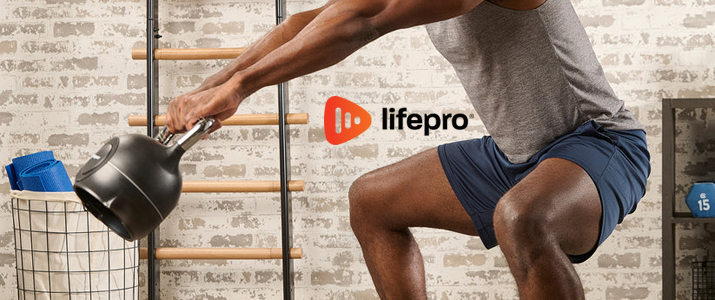
If you’ve ever tripped over a row of kettlebells on your way to the water bottle, you already know the problem. Building a proper home gym means progressively heavier weights – and with standard kettlebells, that means more bells, more floor space, and more money leaving your wallet every time you level up.
But what if you didn’t have to choose between a fully equipped workout and a living room you can actually live in?
Adjustable kettlebells have quietly become one of the smartest investments in home fitness – and once you understand how they work, it’s hard to go back. We’re breaking down exactly how they compare to standard kettlebells, what to look for in a good one, and why one well-designed bell can genuinely replace seven.
Your floor space will thank you. Your wallet will too. Your spouse will too.
Standard vs. Adjustable: What’s Actually the Difference?
At their core, both types of kettlebells do the same job – build strength, power, and endurance through full-body movement. The difference is in how they’re built and who they’re built for.
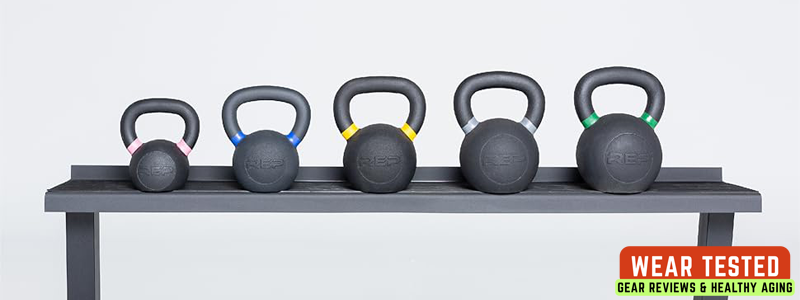
Standard kettlebells are cast iron or steel, one fixed weight, no moving parts. They’re tough, balanced, and beloved by serious lifters for a reason. When you’re doing fast, ballistic moves like swings, snatches, and cleans at an advanced level, the uniform shape and predictable weight distribution matter. There’s nothing to rattle, loosen, or adjust mid-session.
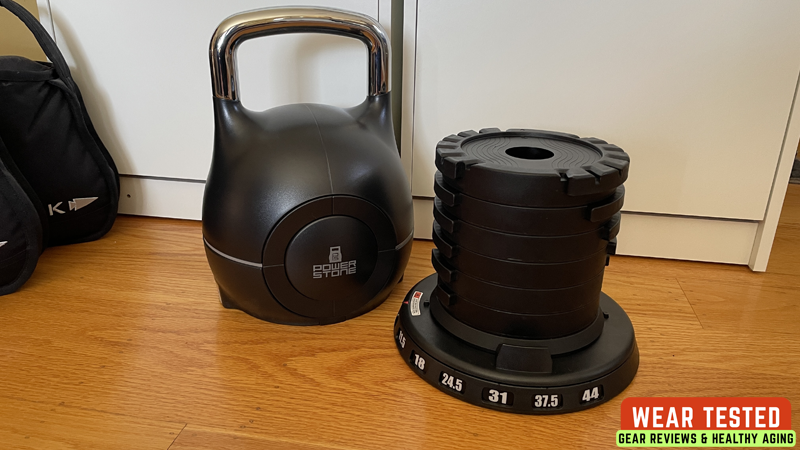
Adjustable kettlebells, on the other hand, are essentially one bell with a system of removable or stackable weight plates built inside. Twist a dial, pull a pin, or load a plate – and the weight changes. Unused plates stay on the base. The bell in your hand weighs exactly what you set it to.
One is purpose-built for simplicity and longevity. The other is built for flexibility and practicality. Neither is objectively better – but for most home gym users, one of them makes a lot more sense.
5 Reasons an Adjustable Kettlebell Might Be the Smarter Buy
- [1] It replaces an entire rack. A single adjustable kettlebell can cover up to seven different weight settings. That’s seven bells worth of training range in one compact footprint – ideal for apartments, spare bedrooms, or any setup where floor space is a premium.
- [2] It costs less per pound. Buying a full set of standard kettlebells at every weight you’ll eventually need adds up fast. Adjustable sets deliver a much lower cost per pound, and you’re not paying for bells you haven’t grown into yet.
- [3] It grows with you. Progressive overload – gradually increasing resistance over time – is the foundation of strength training. With an adjustable bell, you don’t need to buy a new one every time you get stronger. You just dial it up.
- [4] It’s portable. One compact unit is far easier to move, store, or pack than a collection of iron bells. Whether you’re training in the garage, the backyard, or a hotel room, an adjustable kettlebell travels with you.
- [5] It works for every fitness level. Whether you’re just starting out with lighter weights or pushing into heavier resistance, one bell handles the full spectrum. Beginners and experienced lifters can both get a complete workout from the same piece of equipment.
How Do Adjustable Kettlebells Actually Work?
Not all adjustable kettlebells work the same way. There are four main adjustment mechanisms, and each has its own trade-offs:
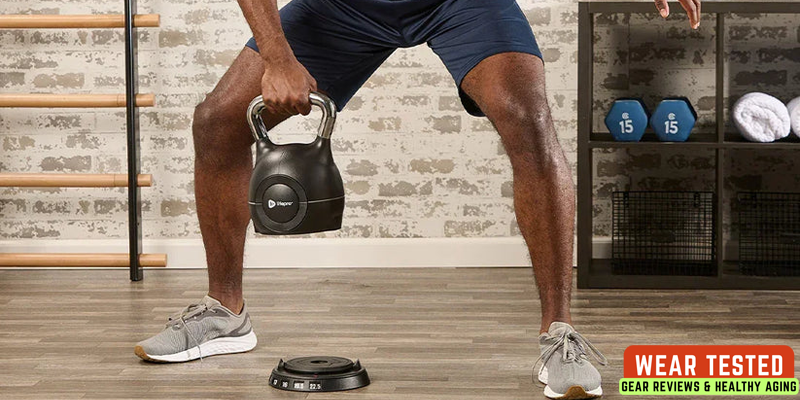
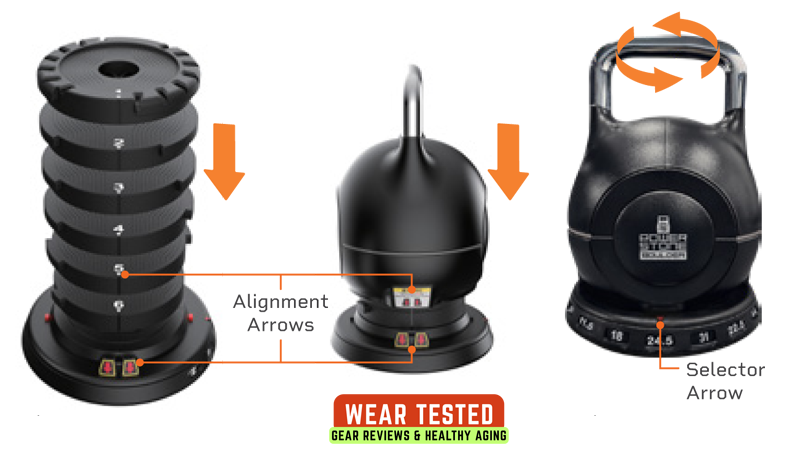
Dial / Twist System. The most popular and user-friendly option. A dial on the outside of the bell selects and locks in your desired weight. The right plates engage, the unused ones stay on the base, and you’re ready to go in seconds. Weight increments are typically 2 to 5 pounds.
Pin System. A magnetic or manual pin inserts into a marked hole on the side of the bell to select the weight. Quick and reliable, though slightly less seamless than a dial.
Competition-Style (Internal Plate Loading). Plates load inside the bell through an internal mechanism – a locking bolt, sliding tabs, or a metal pin. Adjustments take a bit longer, but the shape and feel closely mirrors a traditional competition kettlebell. Great for purists.
Plate-Loaded Handle. Barbell-style plates stack onto a central loading post and lock with collars. This type typically offers the widest weight range, though the design doesn’t have the classic kettlebell shape.
For most home gym users, the dial system offers the best balance of speed, simplicity, and safety.
What to Look For in a Quality Adjustable Kettlebell
The mechanism only matters as much as the build quality behind it. A poorly made adjustable kettlebell will rattle, loosen, and potentially fail – which is both frustrating and dangerous. Here’s what separates a good one from a great one:
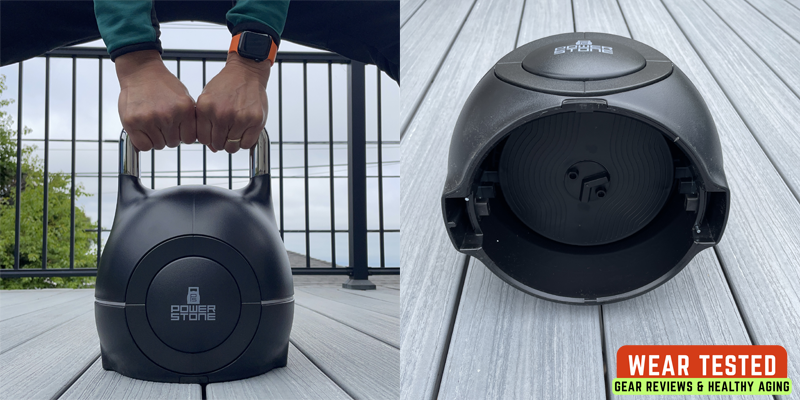
Handle material – Die-cast aluminum or steel handles offer a secure, non-slip grip. Avoid plastic handles, especially for heavier lifts.
Locking mechanism – The click-to-lock feature isn’t just convenient; it’s a safety standard. You want to hear and feel confirmation that the weight is secured before you lift.
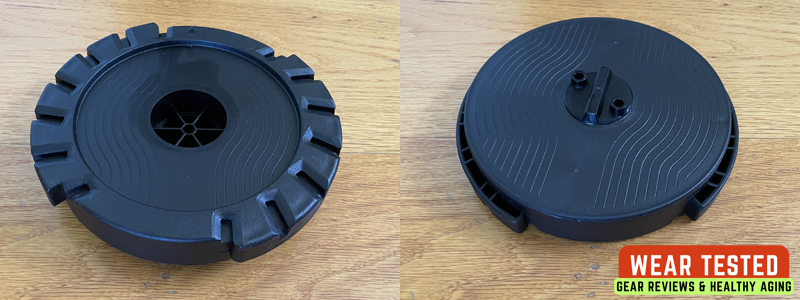
Plate construction – Heavy-duty steel plates with a stable, well-aligned base prevent shifting and rattling during dynamic movements.
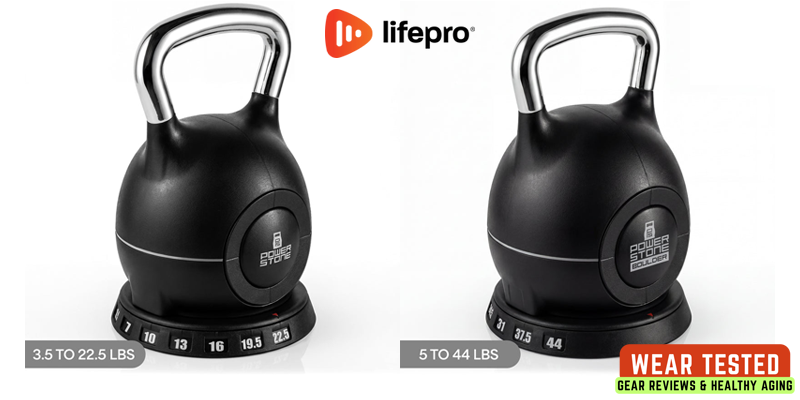
Weight range – Think about where you are now and where you want to be. A 3.5–22.5 lb. range (like the Lifepro PowerStone) suits beginners and intermediate users well; a 5–44 lb. range (like the Lifepro PowerStone Boulder) extends into serious strength territory.
Ergonomics – A smooth, comfortable grip reduces hand fatigue and lets you focus on form, not your hands.
A Closer Look: Lifepro PowerStone Adjustable Kettlebell
If you want a real-world example of how all of this comes together, the Lifepro PowerStone is worth a look.
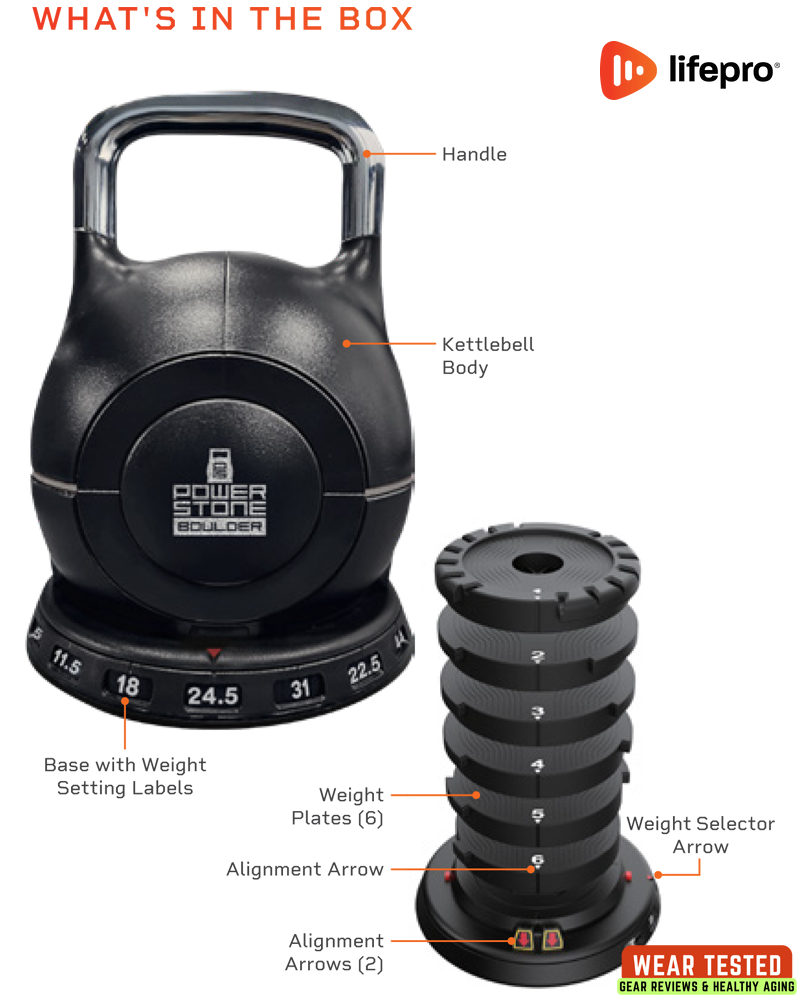
It uses a handle-twist dial system with clear alignment arrows and an audible click-to-lock confirmation – meaning weight changes take seconds, and you know it’s locked before you lift. The handle is die-cast aluminum for a secure, comfortable grip. Seven interlocking steel weight plates sit on a durable nylon base with weight markings and guide arrows built in.
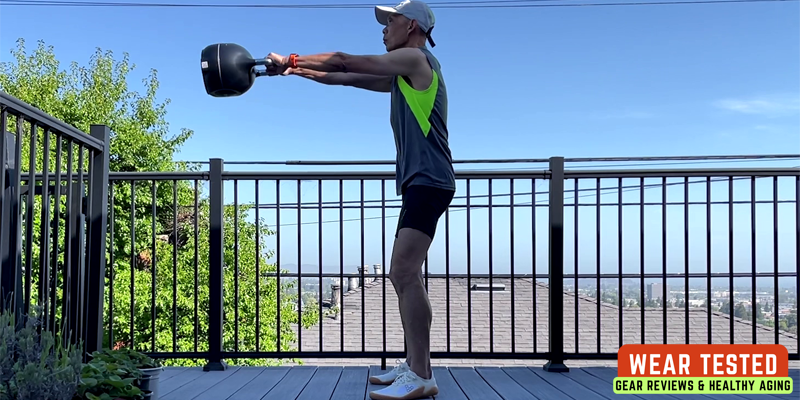
The standard PowerStone covers 3.5 to 22.5 lb. across seven settings. The PowerStone Boulder steps it up to 5–44 lb. for users focused on heavier strength training. Both versions come with access to a free video library of expert-led workouts (on Lifepro Fitness YouTube channel), and Lifepro backs it with a free replacement guarantee if the product doesn’t function as intended.
It’s a well-thought-out piece of equipment that covers the full checklist – quality build, fast adjustments, ergonomic grip, and a weight range that genuinely supports long-term progression.


- Rebuilding Muscle Mass With Strength & Power Training
- Exercise Program for Rebuilding Muscle Strength, Function & Power Using KETTLEBELLS
- Exercise Program for Rebuilding Muscle Strength, Function & Power using DUMBBELLS
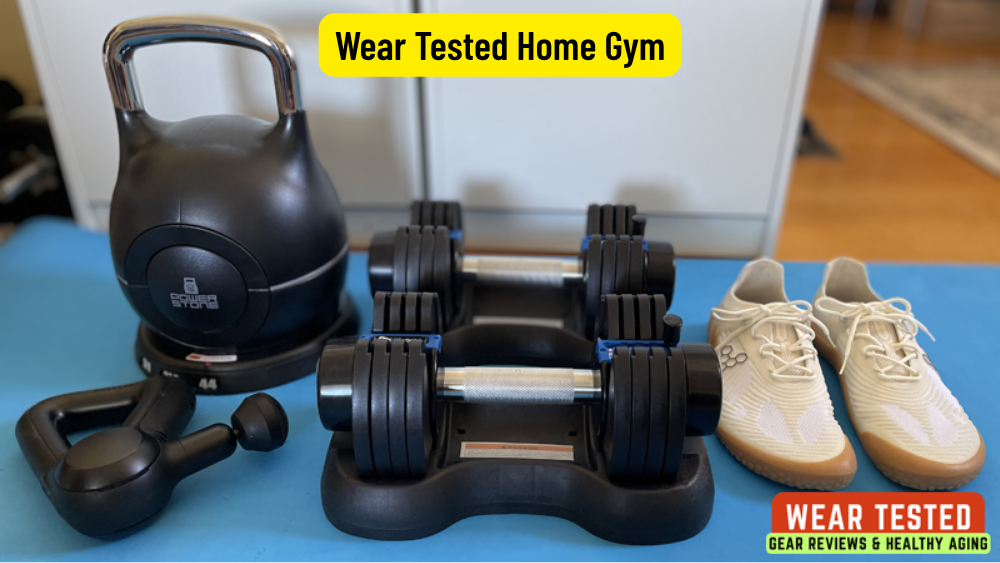
So, Who Should Actually Get an Adjustable Kettlebell?
Adjustable kettlebells aren’t for everyone – and that’s worth being honest about. If you’re an experienced lifter doing high-volume ballistic training at competition level, the feel and reliability of a standard bell still have its place.
But for the vast majority of home gym users? The adjustable kettlebell wins on almost every practical front. It saves space. It saves money. It grows with your training. And when it’s built well, it performs like a premium piece of equipment – not a compromise.
One kettlebell. Seven weights. Zero excuses.
The only question left is what weight to start at. Ready to see the PowerStone in action?
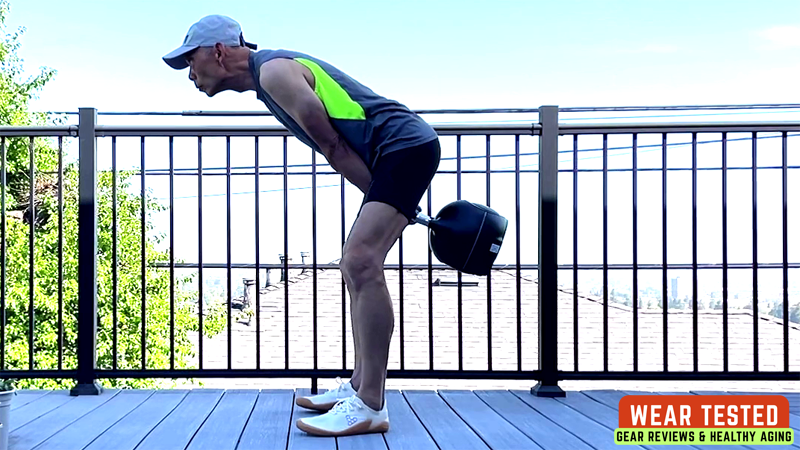
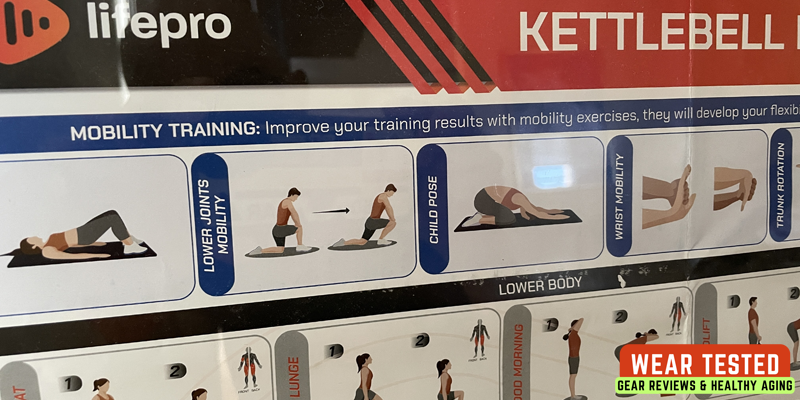
Includes a large 1 1/2 ft by 2 ft poster of Kettlebell exercises – portrait mode on one side, landscape mode on the other side. A $20 value.
Frequently Asked Questions
Are adjustable kettlebells as good as standard kettlebells? For most home gym users, yes. Adjustable kettlebells cover the same fundamental movements – swings, presses, squats, cleans – and deliver comparable results across general strength and conditioning training. Where standard kettlebells have a clear edge is in advanced ballistic training and competition-level technique work, where the fixed shape and weight distribution are harder to replicate. For everyday training and progressive overload, a quality adjustable bell holds its own.
Are adjustable kettlebells safe? A well-built adjustable kettlebell with a reliable locking mechanism is safe for regular use. The key is build quality – look for steel plates, a sturdy handle, and a click-to-lock confirmation system that tells you the weight is secured before you lift. Cheaper models with plastic components or loose mechanisms are where safety concerns arise. Stick to reputable brands with clear product guarantees.
How long do adjustable kettlebells last? A premium adjustable kettlebell can last for decades with normal use. The moving parts – plates, dials, locking mechanisms – are the areas that require more attention than a solid cast iron bell, but high-quality builds are designed to handle repeated daily use without degrading. Avoid dropping the bell from height and give the mechanism a quick check periodically to make sure everything is seated and locked correctly.
What weight should I start with? It depends on your current fitness level and the exercises you plan to do. As a general guide, beginners often start in the 8–15 lb. range for most movements. If you’re already active or have some lifting experience, starting in the 15–25 lb. range gives you room to work. The advantage of an adjustable kettlebell is that you don’t have to guess perfectly – you can start light and dial up as you get stronger.
Can you use an adjustable kettlebell for swings and snatches? Yes, though with a caveat. For general swing and snatch training, a quality adjustable kettlebell performs well. For competitive or high-volume ballistic training where the size, shape, and balance of the bell significantly affect technique, many experienced lifters still prefer a standard competition-style bell. If swings and snatches are your primary focus at an advanced level, consider pairing an adjustable bell with one or two fixed-weight bells for those specific movements.
Is the Lifepro PowerStone good for beginners? It’s one of the better options for beginners, specifically because of its weight range and ease of adjustment. The 3.5–22.5 lb. PowerStone covers the full beginner spectrum, and the twist-dial system makes switching weights between exercises quick and intuitive. The included video library is a genuine bonus for anyone just getting started with kettlebell training – you’re not left to figure out programming on your own.
What’s the difference between the PowerStone and the PowerStone Boulder? The core design and adjustment mechanism are the same. The difference is the weight range. The standard PowerStone runs from 3.5 to 22.5 lb. – ideal for beginners through intermediate users and lighter conditioning work. The PowerStone Boulder runs from 5 to 44 lb., making it the better choice for experienced lifters focused on building serious strength. If you’re unsure which to get, consider where you want to be in 12 months, not just where you are today.